
Views: 0 Author: Site Editor Publish Time: 2026-04-06 Origin: Site


When selecting materials for your project, you face significant decisions. It's important to understand the differences between Dry Carbon Fiber vs Wet Carbon Fiber, as they vary in strength, weight, durability, and cost. Dry Carbon Fiber is produced using a specialized machine known as an autoclave, resulting in parts that are lighter, stronger, and more durable. In contrast, Wet Carbon Fiber is simpler to manufacture and more cost-effective, but it contains more resin, making it heavier and less durable. These factors are crucial when determining the best material for applications in cars, s, or sports gear. DASEN stands at the forefront of advanced carbon fiber and thermal management solutions, ensuring you receive high-quality products for every application.
Learn the main differences between dry and wet carbon fiber. This helps you pick the best material for your project.
Dry carbon fiber is lighter and stronger. It lasts longer. It works well for race cars and s.
Wet carbon fiber costs less. It is easier to make. It fits prototypes and DIY projects.
Look at how it looks: dry carbon fiber has a smooth finish. Wet carbon fiber may need more work to look as nice.
Check your budget: dry carbon fiber costs more because of how it is made. Wet carbon fiber is cheaper and easier to make.
Think about fixing it: wet carbon fiber is easier to repair. It is good for projects that might need changes.
Pick dry carbon fiber if you need strength and low weight. Choose wet carbon fiber for cheaper or easier projects.
Ask experts like DASEN for advice. They can help you pick the best carbon fiber for your needs.
You might ask what makes dry carbon fiber and wet carbon fiber different. The biggest differences are in how they are made, how much they weigh, how strong they are, and how they look. Dry carbon fiber is made with a special machine called an autoclave. This machine uses heat and pressure to make parts with just the right amount of resin and fiber. Wet carbon fiber is made by hand. People put resin on the fiber by hand, so there can be more resin and less fiber in the finished part.
Here is a table that shows the main differences between dry carbon fiber and wet carbon fiber:
Feature | Dry Carbon Fiber (Prepreg) | Wet Carbon Fiber (Hand Layup) |
|---|---|---|
Manufacturing Process | Autoclave (High Heat & Pressure) | Manual Resin Application |
Resin Type | High-Grade Epoxy Resin | Often Cheap Polyester Resin |
Resin-to-Fiber Ratio | Optimal & Precise | Inconsistent & High |
Weight | Extremely Lightweight | Heavier due to Excess Resin |
Strength & Stiffness | Superior Structural Integrity | Moderate to Weak |
Visual Finish | Flawless 3D Weave, Straight Lines | Prone to Waviness & Yellowing |
Best For | Performance & Luxury Applications | Budget Prototypes & DIY |
When you compare dry carbon fiber and wet carbon fiber, you will see dry carbon fiber is lighter. It has more fiber and less resin, so it is strong but not heavy. Wet carbon fiber is heavier because it has more resin and sometimes air bubbles inside. Dry carbon fiber looks clean and smooth, with a matte or satin finish. Wet carbon fiber is shiny but can have wavy lines or look uneven.
It is important to know the differences between dry carbon fiber and wet carbon fiber. These details help you pick the right one for your project. If you want something very strong, light, and nice looking, dry carbon fiber is best. You see it in race cars, s, and fancy sports gear. Wet carbon fiber is good if you care more about saving money than having the best performance. People use it for test parts or do-it-yourself projects.
Dry carbon fiber costs more because it needs special machines and materials. Wet carbon fiber is cheaper and easier to make in small amounts.
How the part looks can change based on which type you use. Dry carbon fiber gives you sharp lines and a pro look. Wet carbon fiber might need extra work to look really good.
DASEN is a leader in making carbon fiber. You can count on DASEN for great dry carbon fiber and wet carbon fiber for any job. They use new technology and check quality carefully, so you always get the best.
Tip: Always pick your material based on what your project needs. Think about weight, strength, price, and how it looks before you choose.

Image Source: unsplash
Dry carbon fiber is used in high-performance products. It is made with a prepreg process. This means carbon fiber sheets already have resin in them. These sheets are called prepreg. The sheets are put into molds. They are cured inside an autoclave. The autoclave uses heat and pressure. This removes air bubbles. It spreads the resin evenly. The parts have a good balance of fiber and resin.
Note: The prepreg process makes dry carbon fiber strong and light. You can trust this method for great results.
Here is a table showing some technical properties of dry carbon fiber made with the prepreg process:
Property | Value |
|---|---|
> 4400 MPa | |
Hook Drop Value | ≥ 10 cm |
Resin Composition | ≤ 20 wt% thermoplastic particles |
Compressive Strength | Superior to conventional composites |
DASEN uses advanced methods to make carbon fiber. You get dry carbon fiber parts with great quality control. DASEN checks every step. This makes sure you get strong and reliable dry carbon.
Dry carbon fiber has many benefits. The parts are light and strong. Dry carbon resists corrosion and chemicals. It works well in tough conditions. You see dry carbon in many industries. The process needs special machines and skilled workers. Dry carbon fiber costs more because of these steps.
Here is a table showing the main advantages and disadvantages of dry carbon fiber:
Advantages of Dry Carbon Fiber | Disadvantages of Dry Carbon Fiber |
|---|---|
Lightweight nature | High manufacturing costs |
High strength-to-weight ratio | Labor-intensive process |
Excellent stiffness | Requires specialized equipment and expertise |
Resistance to corrosion and chemicals | Limited scalability |
Diverse applicability | Potential issues with delamination |
DASEN’s dry carbon fiber is used where quality matters most. DASEN uses strict quality control. Every dry carbon part meets high standards.
Tip: If you want the best performance, dry carbon fiber is your top choice. You get parts that last longer and weigh less.
Dry carbon fiber is used where strength and weight are important. Race cars use dry carbon for body panels and parts. Airs use dry carbon for wings and interiors. Sports gear like bikes and tennis rackets use dry carbon to stay light and strong. Medical devices and electronics also use dry carbon.
DASEN offers dry carbon fiber solutions for many industries. You get products that pass strict quality checks. DASEN’s dry carbon fiber helps you build better, safer, and lighter products.
Callout: Dry carbon fiber is special in carbon fiber manufacturing. It gives you great performance and reliability.
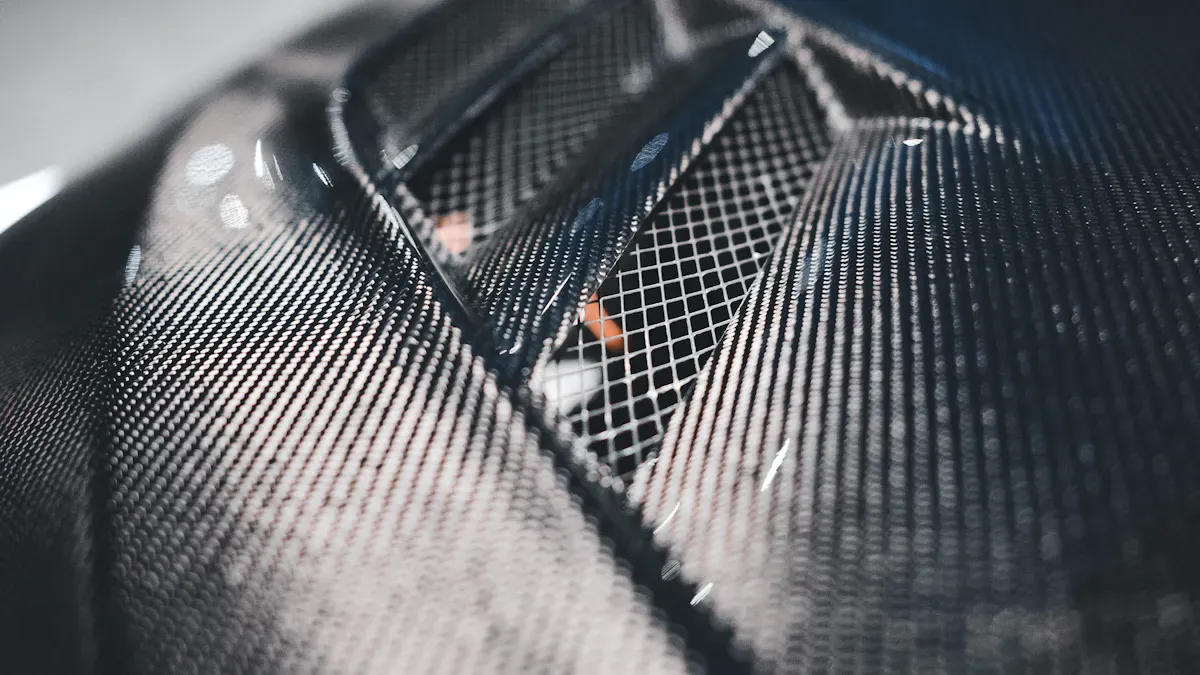
Image Source: pexels
Wet carbon fiber uses a process called wet lay-up. You start by placing carbon fiber fabric into a mold. You then apply resin over the fabric by hand. This step makes sure the fabric gets fully soaked. After that, you let the part cure. You can let it cure at room temperature or use heat to speed up the process.
Wet carbon lay-up is simple and does not need expensive machines. You can do this process with basic tools. Wet carbon fiber usually has more resin than dry carbon fiber. This extra resin makes the finished part heavier. It can also make the part less strong. The look of wet carbon fiber can change because the resin may not spread evenly. Sometimes, you see wavy lines or small bubbles in the surface.
Tip: Wet carbon fiber is a good choice if you want to save money and do not need the highest strength.
Wet carbon has some clear advantages. You can make parts quickly and at a lower cost. You do not need special machines or a lot of training. Wet carbon works well for making prototypes or custom shapes. You can fix or change parts easily if you make a mistake.
Wet carbon also has some limits. The parts are heavier because of the extra resin. You may see less strength compared to dry carbon fiber. The finish might not look as smooth or perfect. Wet carbon can show lines or yellow spots over time. You need to check the part for air bubbles or uneven spots.
Here are some key points about wet carbon:
Easy to make with simple tools
Lower cost than dry carbon fiber
Heavier and less strong
Finish can be uneven
DASEN offers wet carbon fiber solutions for projects where you want to save money. You get reliable parts for many uses. DASEN checks quality to make sure you get good results every time.
You see wet carbon in many industries. Car makers use wet carbon fiber for body panels and some structural parts. In s, wet carbon helps make wings and tail sections. Boat builders use wet carbon for hulls and masts. Sports companies use wet carbon in tennis rackets, bike frames, and fishing rods. Construction workers use wet carbon to make concrete stronger or fix bridges.
Here is a table showing where wet carbon fiber is used and why it helps:
Industry | Typical Uses | Benefits |
|---|---|---|
Automotive | Body panels, structural components | Improves performance and safety |
Aerospace | Wings, fuselages, tail sections | Reduces weight, increases strength |
Marine | Boat hulls, masts | Resists corrosion, handles tough environments |
Sports/Recreation | Tennis rackets, bike frames, fishing rods, hockey sticks | Boosts durability and maneuverability |
Construction | Reinforcing concrete, strengthening bridges | Adds strength, keeps weight low |
Wet carbon fiber is also called resin-infused carbon fiber in some cases. You can use wet carbon for many projects where you want a balance of cost and performance. DASEN supports you with wet carbon solutions that fit your budget and needs.
Note: Wet carbon fiber gives you flexibility for custom shapes and repairs. You can choose wet carbon when you want a good mix of price and function.
It is important to know how dry carbon fiber and wet carbon fiber perform. Dry carbon fiber uses a prepreg process and cures in an autoclave. This makes the fiber volume fraction higher, usually between 50% and 65%. Wet carbon fiber is made by hand lay-up. It has a lower fiber volume fraction, often between 35% and 50%. Because of this, dry carbon fiber works better for mechanical performance.
Dry carbon fiber parts have fewer voids, usually less than 2%. Wet carbon fiber can have more voids, sometimes over 5%. Fewer voids help dry carbon fiber last longer and resist fatigue. Dry carbon fiber has a higher strength-to-weight ratio. This makes it the best choice for high-performance needs.
Here is a table showing the main performance differences:
Performance Aspect | Dry Carbon Fiber (Prepreg/Autoclave) | Wet Carbon Fiber (Wet Layup/Infusion) |
|---|---|---|
Fiber Volume Fraction | Higher and more consistent (50–65%) | Lower and more variable (35–50%) |
Void Content | Low (<2%) | Higher (2–5%+) |
Strength-to-Weight Ratio | Superior, better specific strength and stiffness | Lower, heavier for equivalent strength |
Fatigue Life | Better due to consistent resin distribution and curing | Generally lower due to higher voids and resin content |
Surface Finish Quality | High-gloss, mirror-smooth, tightly woven pattern | Good to fair; may require additional finishing |
Impact Resistance | Generally better overall crash energy management | Can perform better in localized impacts with tougher resins |
Dry carbon fiber is used in space, racing, and other high-performance areas. Wet carbon fiber is good for prototypes, budget builds, and parts that do not need to be very strong. If you want the best performance, dry carbon fiber is the right pick.
Tip: Choose your material based on what your project needs. Dry carbon fiber gives you more strength, durability, and a better finish.
Weight and strength are very important when comparing carbon fiber materials. Dry carbon fiber is lighter because it uses less resin and more fiber. This makes each part strong without extra weight. Wet carbon fiber is heavier because it has more resin and sometimes air pockets.
Lab tests show dry carbon fiber has a tensile strength of about 3793 MPa and a Young’s modulus of 234 GPa. Wet carbon fiber, also called CFRP laminate, has a tensile strength of 724 MPa and a Young’s modulus of 56.5 GPa. This means dry carbon fiber is much stronger and stiffer.
Dry carbon fiber gives you a higher strength-to-weight ratio.
Wet carbon fiber is heavier and less strong for the same size part.
Dry carbon fiber keeps its strength over time, even after many uses.
Wet carbon fiber can lose strength faster, especially in tough conditions.
Dry carbon fiber is best for high-performance parts in cars, s, and sports gear. Wet carbon fiber works for jobs where weight and strength are not as important.
How your part looks and feels can matter a lot. Dry carbon fiber gives you a smooth, mirror-like surface. The weave looks tight and even. You see this finish in luxury cars and high-end products. Dry carbon fiber often needs little or no extra work to look great.
Wet carbon fiber can look shiny, but the surface may have waves or small bubbles. You might need to add a clear coat or filler to get a perfect finish. Wet carbon fiber parts often need more work to match the look of dry carbon fiber.
Here is a table showing the differences in appearance and finish:
Property | Dry Carbon (Prepreg / Infused) | Wet Carbon (Hand Lay-up) |
|---|---|---|
Surface finish | Mirror-like, consistent (ideal for visible parts) | Often requires filler/clearcoat to match appearance |
Dry carbon fiber achieves a higher fiber volume fraction and lower void content. This leads to a better look and better performance.
Wet carbon fiber may need extra steps to look as good as dry carbon fiber.
If you want a part that looks good and works well, dry carbon fiber is the best choice. You get a clean, professional finish every time.
Note: Dry carbon fiber is great for both performance and appearance. Wet carbon fiber gives you flexibility and lower cost, but you may need to do more work to get the look you want.
You need to think about cost when choosing between dry carbon fiber and wet carbon. Dry carbon fiber costs more because the process uses special machines and skilled workers. The prepreg sheets and autoclave curing add to the price. You pay extra for the high strength, low weight, and perfect finish.
Wet carbon costs less. You can make parts with simple tools and basic skills. The wet lay-up process does not need expensive equipment. Wet carbon fiber uses more resin, which is cheaper than the fiber itself. You save money, but you get heavier parts and less strength.
Here is a table that shows the main cost differences:
Factor | Dry Carbon Fiber | Wet Carbon Fiber |
|---|---|---|
Equipment | Autoclave, molds | Basic tools, molds |
Labor | Skilled, technical | Less skilled, manual |
Material Cost | Prepreg sheets, high-grade resin | Standard fabric, cheaper resin |
Production Speed | Slower, precise | Faster, flexible |
Final Price | Higher | Lower |
Tip: If you want the best performance and finish, dry carbon fiber is worth the investment. If you need to save money, wet carbon gives you a good balance of price and function.
You may need to fix parts after damage. Repairing dry carbon fiber can be hard. The material is strong and tightly woven. You often need special tools and skills to repair it. Sometimes, you must replace the whole part.
Wet carbon is easier to repair. You can patch or rebuild damaged areas with simple tools. Wet carbon fiber lets you add new layers of fabric and resin. You can fix cracks or holes without replacing the whole part. Wet carbon works well for custom repairs and changes.
Here are some points to help you understand repairability:
Dry carbon fiber repairs need expert help.
Wet carbon repairs are simple and cost less.
You can use wet carbon for quick fixes and upgrades.
Note: Wet carbon is a good choice if you want to repair or change parts often. Dry carbon fiber is best for parts that must stay strong and last a long time.
You see dry carbon fiber and wet carbon in many industries. Dry carbon fiber works best in places where weight and strength matter most. Race cars use dry carbon fiber for body panels and wings. Airs use it for seats, interiors, and structural parts. Sports gear like bikes and tennis rackets use dry carbon fiber to stay light and strong.
Wet carbon fits projects where you need flexibility and lower cost. Car makers use wet carbon fiber for custom panels and prototypes. Boat builders use wet carbon for hulls and masts. Construction workers use wet carbon to reinforce concrete and fix bridges. You can use wet carbon for DIY projects, repairs, and custom shapes.
Here is a list of common application scenarios:
Race cars: Dry carbon fiber for performance parts, wet carbon for prototypes.
Airs: Dry carbon fiber for structural parts, wet carbon for interior panels.
Boats: Wet carbon for hulls and masts.
Sports gear: Dry carbon fiber for high-end products, wet carbon for budget options.
Construction: Wet carbon for repairs and reinforcement.
DASEN offers both dry carbon fiber and wet carbon solutions. You can choose the right material for your project. DASEN supports you with quality products for every application.
Callout: Think about your project needs. Dry carbon fiber gives you top performance. Wet carbon gives you flexibility and savings.
You can quickly see how dry carbon fiber and wet carbon fiber are different. The table below shows both types side by side. This makes it easier to pick the right material for your project.
Feature | Dry Carbon Fiber (Prepreg/Autoclave) | Wet Carbon Fiber (Hand Lay-up) |
|---|---|---|
Manufacturing Method | Uses prepreg sheets and autoclave | Uses hand lay-up and manual resin |
Fiber Content | High (50–65%) | Lower (35–50%) |
Resin Content | Low and controlled | Higher and less controlled |
Weight | Very light | Heavier |
Strength | Very strong and stiff | Moderate strength |
Surface Finish | Smooth, even, matte or satin | Glossy but can be wavy or uneven |
Durability | High resistance to fatigue and wear | Good for basic use |
Repairability | Needs expert repair | Easy to repair with simple tools |
Cost | Higher | Lower |
Best For | High-performance, luxury, space | Prototypes, DIY, budget projects |
DASEN Solutions | Premium, quality-checked parts | Reliable, cost-effective options |
Tip: Look at this table to help you decide which carbon fiber fits your needs. Pick dry carbon fiber if you want the best performance. Choose wet carbon fiber if you want to spend less money.
You can ask DASEN for help anytime. DASEN has both types of carbon fiber for many jobs. You get advice and support for your project from start to finish.
You need to think about performance before making a decision. If you want carbon fiber parts for high-performance applications, dry carbon gives you the best results. Dry carbon offers superior strength and stiffness. You see this material in structural components and chassis parts where performance matters most. Weight plays a big role in performance. Dry carbon is lighter, which helps vehicles move faster and use less fuel. Wet carbon works well for less demanding applications. It is easier to manufacture and costs less, but it does not match the performance of dry carbon.
Type of Carbon | Advantages | Applications |
|---|---|---|
Wet Carbon | Cost-effective, easier to make | Less demanding applications |
Dry Carbon | Superior strength-to-weight ratio | High-performance applications |
You should choose dry carbon when you need top performance. Wet carbon fits projects where performance is not the main goal.
Budget affects your decision. Dry carbon costs more because it uses special machines and skilled workers. You pay extra for high performance and a perfect finish. Wet carbon is more cost-effective. You can make parts with basic tools and less training. If you have a tight budget, wet carbon is a smart choice. You get reliable carbon fiber parts without spending too much.
Here are some tips to help you decide:
Think about how much money you can spend.
Look at how light the part needs to be.
Check if the part must be very strong.
Decide how nice it needs to look.
Choose if you want to make it yourself or buy it.
Wet carbon works well for prototypes, budget builds, and custom shapes. Dry carbon is best for projects where performance matters most.
Appearance can influence your decision. Dry carbon gives you a smooth, mirror-like surface. The weave looks tight and even. You see this finish in luxury cars and high-end products. Wet carbon can look shiny, but the surface may have waves or small bubbles. You might need to add a clear coat or filler to get a perfect finish.
Different weave patterns affect how your carbon fiber parts look and perform. Twill weaves work well for complex shapes because they drape easily. Plain weaves make the fabric more rigid, which is good for structural parts needing high tensile strength. Specialized patterns like satin or unidirectional offer unique looks and performance features.
Tip: If you want your carbon fiber parts to stand out, choose dry carbon with a weave pattern that matches your style and performance needs.
You should think about how the part will look and how it will perform. Dry carbon gives you both beauty and performance. Wet carbon gives you flexibility and savings.
You need to match the type of carbon fiber to your project. Each application has its own needs. Dry carbon fiber and wet carbon fiber work best in different situations.
Dry carbon fiber fits projects where you need high strength and low weight. You see this material in racing cars, s, and advanced sports equipment. These parts must be strong but also light. Dry carbon fiber gives you both. You also get a clean, professional look. If you build something that faces stress or needs to last a long time, dry carbon fiber is the right choice.
Wet carbon fiber works well for projects where cost matters more than top performance. You can use wet carbon fiber for prototypes, custom car parts, or repairs. Many people use it for DIY projects at home. Wet carbon fiber lets you make parts in small batches. You do not need expensive machines. You can shape it by hand and fix it easily if you make a mistake.
Here is a table to help you decide which type fits your application:
Application Type | Best Carbon Fiber Choice | Why It Works Well |
|---|---|---|
Racing car body panels | Dry Carbon Fiber | Light, strong, and durable |
Aerospace components | Dry Carbon Fiber | High strength-to-weight ratio |
Sports gear (bikes, rackets) | Dry Carbon Fiber | Performance and professional finish |
Prototypes | Wet Carbon Fiber | Cost-effective and easy to shape |
DIY projects | Wet Carbon Fiber | Simple tools and flexible use |
Repairs and modifications | Wet Carbon Fiber | Easy to patch and adjust |
Tip: Always think about what your project needs most. If you want the best strength and lowest weight, pick dry carbon fiber. If you want to save money or need to make changes often, wet carbon fiber is a smart choice.
You do not have to choose alone. DASEN helps you find the best carbon fiber for your project. DASEN offers both dry and wet carbon fiber solutions. You get products that pass strict quality checks. DASEN’s team listens to your needs and gives advice based on your goals.
If you work on high-performance projects, DASEN recommends dry carbon fiber. You get strong, lightweight parts with a smooth finish. These parts work well in cars, s, and sports gear. If you need to control costs or want to make custom shapes, DASEN suggests wet carbon fiber. You can use it for prototypes, repairs, or DIY builds.
DASEN supports you from start to finish. You can ask questions and get expert help. DASEN’s products fit many industries, such as electronics, transportation, and medical devices. You get reliable materials that help your project succeed.
Contact DASEN for:
Advice on material selection
Custom carbon fiber solutions
Support for both small and large projects
Note: Visit DASEN’s official website to explore more products and get in touch with experts who can guide you every step of the way.
You need to make smart choices when picking carbon fiber.
Dry carbon fiber is best if you want parts that are light and strong for racing or high performance.
Wet carbon fiber is good for upgrades or inside car parts when weight does not matter as much.
Material | Performance | Budget-Friendly | Application Needs |
|---|---|---|---|
Carbon Fiber | Great strength compared to weight | No | Works best for fast cars, racing, and s |
DASEN uses smart ways to make carbon fiber and cares about the environment. You get strong and good carbon fiber for any project.
You get more strength from dry carbon fiber because it uses less resin and more fiber. The autoclave process removes air bubbles. This gives you a part that is both strong and light.
Yes, you can use wet carbon fiber for car parts. It works well for interior panels, custom shapes, and repairs. You save money, but the parts may weigh more.
Dry carbon fiber costs more because it needs special machines and skilled workers. The prepreg process takes more time and care. You pay for higher quality and better performance.
You can repair wet carbon fiber with simple tools. Just sand the damaged area, add new fabric, and apply resin. Let it cure. This process is easy for most people.
Dry carbon fiber usually has a smooth, even finish. The weave looks tight and clean. You see this in luxury cars and high-end products. Wet carbon fiber may need extra work to look as good.
Wet carbon fiber is better for DIY projects. You can shape it by hand and fix mistakes easily. You do not need expensive equipment. It is a good choice for beginners.
You can contact DASEN for high-quality dry and wet carbon fiber. DASEN offers expert advice and reliable products for many industries. Visit DASEN’s official website to learn more.