
Views: 0 Author: Site Editor Publish Time: 2026-09-22 Origin: Site


Graphene is a single layer of carbon atoms; graphite is a stack of millions of them. You likely know graphite from pencil lead and industrial lubricants. Graphene, meanwhile, earns its "wonder material" reputation through extraordinary strength and conductivity. The difference goes far beyond thickness.
This article compares their atomic structure, physical properties, and real-world applications, especially in thermal management. You need this knowledge to choose wisely between a graphene sheet vs. graphite sheet for your designs. Market analysts project the graphene market will grow at compound annual rates of 30-40% over the next several years, signaling its rising commercial importance. Understanding each material's strengths helps you make informed, cost-effective decisions today.
Graphene is just one layer of carbon atoms, while graphite is many layers piled on top of each other.
Graphene conducts heat and electricity better than any metal, but it only works in two dimensions.
Graphite spreads heat well across its surface, but not so well through its depth.
Graphene thermal pads move heat up, fixing graphite's flaw.
Graphite is cheap and easy to produce. Graphene is expensive and hard to scale.
Choose graphite to spread heat sideways in devices like smartphones at a low cost.
Pick graphene for special jobs, such as sensors or moving heat straight up in small areas.
Both materials will be used together, meeting different needs in electronics and industry.
You cannot see the difference with your eyes, but the atomic structure defines everything. The debate around a graphene sheet vs. graphite sheet starts at the atomic level. Think of a single layer of graphene as one perfect sheet of paper. Graphite is a thick ream of the same paper, stacked loosely. This difference in arrangement creates totally different materials.
Graphene is made of just one layer of carbon atoms. These atoms sit in a flat, six-sided honeycomb pattern. This setup is extremely strong. The bond between carbon atoms in graphene is very short. The table below shows the difference.
Material | Carbon-Carbon Bond Length |
|---|---|
Graphene (single layer) | 1.42 Å (0.142 nm) |
Diamond | 1.54 Å (0.154 nm) |
Shorter bonds mean stronger connections. That is a big reason graphene has such amazing tensile strength. The thinnest possible graphene sheet is only one atom thick. Its measured thickness is about 0.335 nanometers. That makes it the thinnest material ever found.
Graphite is just many graphene layers piled together. These layers stack in a set order, often called AB stacking. Picture one honeycomb layer. The next layer sits slightly off-center, not right on top. This builds a three-dimensional crystal structure. One layer is graphene; many layers make graphite. This stacking changes the material's traits a lot.
Inside one graphene layer, carbon atoms bond covalently. These are very strong chemical bonds that share electrons well. That is why graphene conducts heat and electricity so well. Electrons flow easily through this covalent network.
The forces that hold graphite layers together are quite different. They are weak van der Waals forces. These are not chemical bonds. They are just mild attractions between molecules. The binding energy between layers is very low.
Method | Binding Energy (meV/atom) |
|---|---|
Many-body dispersion (MBD) | ≈ -51.24 |
RPA reference | 48 |
With only about 48–51 meV per atom holding the layers together, they can slide past each other easily. This is why graphite feels slippery. It is why a pencil leaves a mark on paper. The weak sliding force is a key difference in the graphene sheet vs. graphite sheet comparison.
A single layer of graphene is a true two-dimensional material. Every atom is on the surface. This gives it a very high surface area. It also leads to the unique properties of graphene sheets. The electrons are confined to a , which affects how they move. This 2D nature is what makes graphene so special for sensors and electronics.
Graphite, on the other hand, is a bulk 3D material. Its thickness can range from microns to millimeters. You can hold a piece of graphite in your hand. This bulk structure makes it easier to process. It is cheaper to produce. For many industrial applications, like thermal management, this bulk 3D structure is exactly what you need. It provides a solid path for heat to spread.
You might think graphene and graphite act alike. The truth is very different. A single layer of graphene can do things that many layers of graphite cannot. But for many real-world jobs, graphite's structure gives it useful benefits. Here is a direct look at the main properties.
Electrons move through graphene with almost no pushback. This is called ballistic transport. Electrons can travel micrometers without hitting anything. You get electrical conductivity higher than any known metal. This comes from the perfect crystal pattern of the single layer.
The carbon atoms in graphene form a honeycomb with no flaws. Electrons move like light through a fiber optic cable. Nothing bumps into them to slow them down. You get steady high conductivity even at room temperature. High-speed electronics and fast transistors gain a lot from this trait.
Graphite carries electricity well along its layers. The flat direction shows good metal-like conduction. But the up-and-down direction acts very differently.
Through- resistivity is 10–100 times higher due to weak interlayer coupling.
You must plan your design around this uneven behavior. If your device needs heat or electricity to pass through the material's thickness, graphite does poorly. Graphene, by contrast, gives even two-dimensional flow.
Heat moves through graphene sheets faster than through any known material. Phonons carry heat along the with amazing efficiency. This makes graphene great for cooling hot spots in electronics.
You can get heat flow above 5000 W/mK in a single suspended layer. That is more than ten times the heat flow of copper. For hot spots in small devices, nothing spreads heat faster. These special traits make graphene a top choice for next-generation heat interface materials.
In graphite, heat moving across the layers hits big barriers. Weak van der Waals forces between layers scatter phonons. This keeps through- heat flow much lower.
For heat control, you must line up graphite sheets flat against the heat source. This works well for spreading heat sideways. But if your design needs heat to move upward, graphite falls short. A single layer of graphene avoids this issue completely because it has no cross- direction to worry about.
Graphene is the strongest material ever tested. The nanoindentation test in 2008 proved this directly.
A defect-free monolayer has a Young's modulus near 1 TPa and an intrinsic strength of about 130 GPa, measured directly by nanoindentation in 2008.
Picture stretching a graphene sheet close to its breaking point. It handles huge stress before it fails. These amazing traits come from the strong covalent bonds in the honeycomb pattern. But you should know that making defect-free graphene in large amounts is still a lab-only feat. Most commercial graphene has flaws that lower these numbers.
Graphite offers a totally different mechanical profile. The weak forces between layers let sheets slide past each other easily. You know this from pencil marks and industrial lubricants.
This slipperiness makes graphite simple to process and shape. You can grind it, press it, and form it into sheets of any thickness. Yet this same trait makes graphite brittle under pulling force. It cannot match graphene's tensile strength. For jobs that need flexibility and toughness, graphite often cracks under repeated stress. Graphene, in contrast, stays flexible and strong. Still, for bulk handling and making, graphite's easier processing often wins. It is already electrically and thermally conductive at a much lower cost.
The way you make a material determines its cost and quality. Natural sources come from the ground. Synthetic versions come from a furnace. Understanding these paths helps you see why one material dominates today.
Natural sources come from metamorphosed rocks. Miners extract the ore and float the flakes to the surface. Standard natural flake powder reaches 90–95% carbon. High-purity grades go above 99% carbon.
You get this material at a low cost. The price depends on the purity level you need.
Graphite Type | Purity | Price per kg (USD) |
|---|---|---|
Natural flake powder | 90–95% C | $0.50 – $0.90 |
High-purity natural flake powder | 99%+ C | $0.90 – $1.80 |
Synthetic powder | 99%+ C | $1.80 – $3.50 |
Natural sources offer the lowest entry price. You pay more for higher purity.
Manufacturers start with carbon precursors like petroleum coke. They heat these materials above 2500°C in an electric furnace. The high temperature arranges carbon atoms into the crystal structure. This process yields a consistent product. Purity reaches 99% or higher. You pay a premium for this control. Synthetic powder costs $1.80 to $3.50 per kilogram.
One way to produce the material is to peel layers from a bulk source. You start with flakes and use liquid shear to separate the layers. This method works for small batches.
Liquid-phase exfoliation gives a typical yield. The method produces about 1 wt% single layer. Further processing raises this to 7–12 wt%.
Milling Time | Monolayer Percentage | Apparent Yield | Average Lateral Size |
|---|---|---|---|
10 hours | 91.2% | Not specified | 780 nm |
15 hours | 97.9% | 90.7% | 190 nm |
Longer milling times improve the yield. After 15 hours, you get nearly 98% monolayers with a 90.7% overall yield. The flakes are small, about 190 nanometers across. This data helps you understand the output quality for your application.
Chemical vapor deposition builds the material from scratch. You place a copper foil in a furnace. You flow methane gas over it at high temperatures. Carbon atoms from the methane settle on the copper surface. They form a continuous high-quality graphene film.
This method gives you large-area films with few defects. The crystal quality is high. You get better electronic properties than exfoliated flakes. But the process requires vacuum equipment and precise control. Costs stay high.
Industrial production operates at a massive scale. Manufacturers like DASEN produce thermal graphite sheets at annual capacities of 6 million square meters. This demonstrates true industrial viability.
You find this material everywhere. It fills pencils, lubricants, batteries, and thermal pads. The supply chain is mature. Costs are low. Industrial materials meet high-volume manufacturing demands without issue.
Production for the single-layer material remains different. It moves in smaller batches. Most output goes to research or niche applications. The cost per gram stays high. You cannot match the price point of the bulk material.
Graphene materials show remarkable properties in the lab. But they cost much more to produce. For now, you choose the bulk material for most commercial thermal management needs.
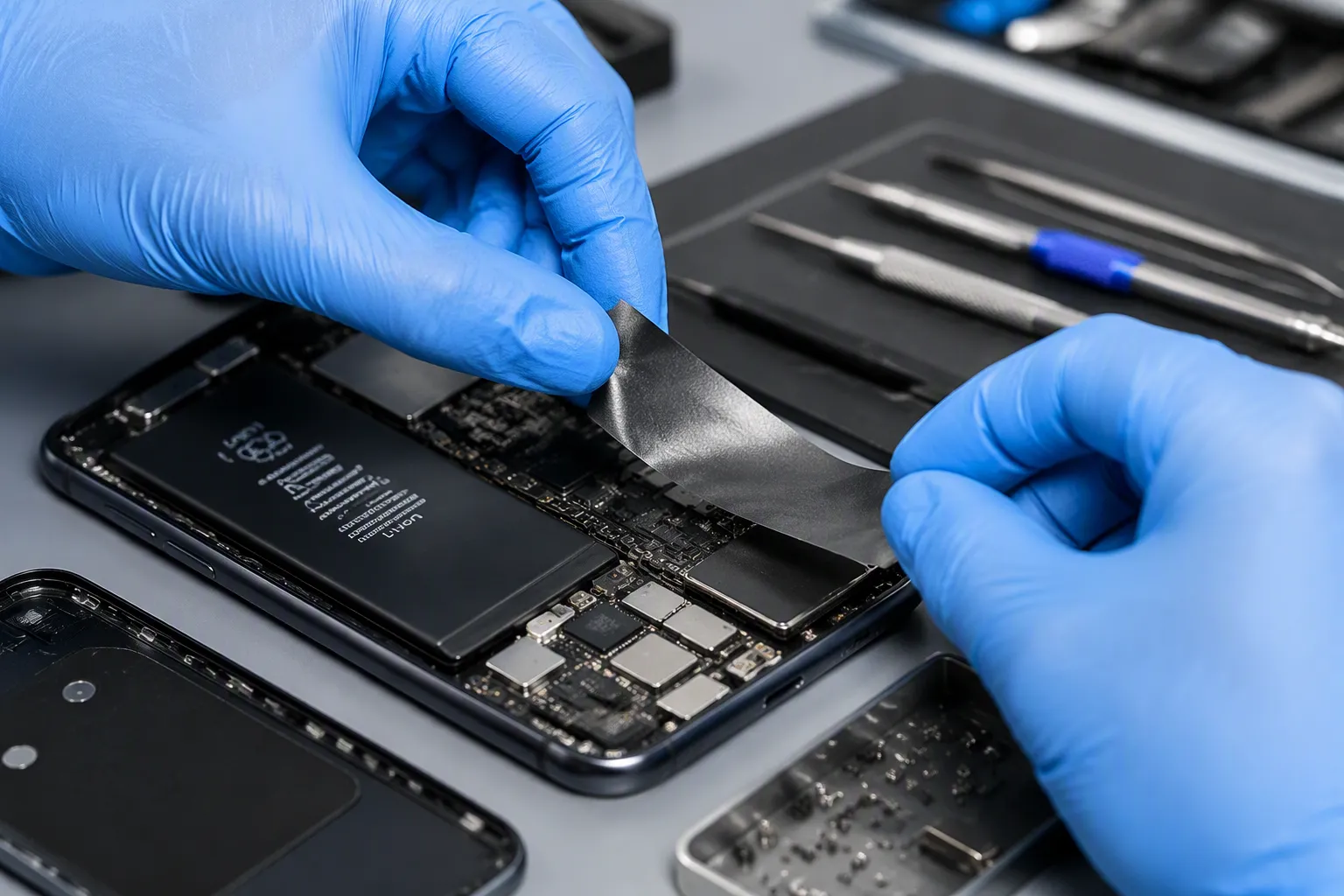
You now know how these materials differ at the atomic level and how they are made. The real question is how they work in real devices. Most commercial demand today comes from thermal management. Your choice depends on your heat path, your space limits, and your budget.
Flat-rolled graphite sheets lead the market for cooling consumer electronics. Manufacturers press natural or synthetic graphite flakes into thin, bendable sheets. These sheets spread heat sideways across hot parts. You find them inside smartphones, tablets, LED lighting systems, and power electronics.
DASEN makes both synthetic and natural graphite sheets for different heat loads. The synthetic sheets spread heat at 1500–2000 W/(m·K) along their surface. This makes them good for high-power parts like CPUs and laser diodes. Natural graphite sheets work well for less demanding jobs at a lower cost. DASEN holds ISO9001 certification and over 10 patents in thermal interface technology. These credentials show that their production meets steady quality standards. You get reliable material from a maker with proven industrial scale.
A flat-rolled graphite sheet moves heat along its surface. You place it directly over a heat source. Heat enters one face and spreads outward through the conductive layers. This design works best when your device has a wide, flat area for heat to escape.
In a smartphone, engineers attach a thin graphite sheet behind the processor. The sheet spreads heat across the phone's back cover. This keeps the processor cool without a fan. In LED lighting arrays, the same method stops individual diodes from overheating. The thermal graphite sheet lowers hot spots and extends part life. The in- conductivity lets heat travel meters sideways while staying thin enough to fit inside tight spaces.
Sometimes heat must move through the thickness of a material, not along its surface. This is where graphene thermal pads offer a different answer. They fix the cross- limit that bulk graphite faces.
Manufacturers make graphene thermal pads by lining up graphene nanoplatelets standing upright on the pad's surface. This vertical setup gives heat a direct route through the material's thickness.
According to an industry report by IDTechEx, vertically aligned graphene nanoplatelet thermal pads reach an effective through- thermal conductivity of 80 W/m·K when you apply a compression of 2 MPa. This number far exceeds the cross- conductivity of standard graphite sheets. You get efficient heat transfer in the direction you need most.
The vertical structure also lets the pad fit uneven surfaces. When you press it between a heat sink and a processor, it fills tiny air gaps. This cuts thermal interface resistance a lot.
You find these pads useful in thin-gap designs where space is tight. Laptop processors, power modules, and automotive electronics often have gaps between 0.5 mm and 3 mm between the heat source and the cooling plate. A graphene thermal pad fits these gaps exactly.
Temperature tolerance is another plus. The table below compares operating limits.
Material Type | Maximum Operating Temperature |
|---|---|
Silicone-based thermal pad | 150°C to 200°C |
Graphite / Graphene thermal pad | 250°C to 350°C |
A graphene thermal pad handles higher temperatures than a silicone pad. This makes it good for high-power uses near LEDs, IGBTs, and electric vehicle batteries. You get steady performance even under long thermal stress.
You now have two clear options. One spreads heat sideways. The other moves heat upward. Your choice depends on three factors.
Start by finding the direction of heat flow. If your heat source sits on a large heat spreader or metal chassis, you want in- heat spreading. A flat graphite sheet, with thermal conductivity values in the 1500–2000 W/(m·K) range, handles this job well.
If heat must move directly from a processor up into a heat sink, you need through- conductivity. A graphene thermal pad, with its vertically aligned structure, delivers 80 W/m·K through the material thickness under compression.
You should also think about the thermal conductivity of the whole system. The pad or sheet is only one part. Your interface resistance, mounting pressure, and ambient airflow all affect final performance.
Graphite sheets cost less per square meter. They also come in large rolls and can be die-cut to complex shapes. Their flexibility lets them wrap around parts and fit curved surfaces. These traits make thermal graphite sheets the standard pick for most consumer electronics.
Graphene pads cost more due to their specialized production process. However, they offer a unique edge in through- uses. When you need vertical heat transfer in a thin gap, no other material matches their mix of high thermal conductivity and thin profile.
Your decision also depends on production volume. For high-volume manufacturing, graphite sheets offer proven supply chains and low unit costs. Graphene pads fit best in premium or performance-critical designs where the extra cost is worth better thermal performance.
The main uses of these two materials overlap in heat dissipation, but they shine in different directions. Choose the flat-rolled sheet for lateral spreading. Choose the vertical pad for through- flow. Both are valid, high-performance thermal interface materials when you match them to the right thermal path.
Thermal management is just one part of the carbon material market. Graphene and graphite also play key roles in sensing, lubrication, and making materials stronger. Knowing these uses helps you see the full value of each material.
Every atom in a single graphene layer sits on the surface. This creates a huge sensing area. When gas molecules land on it, they change the electrical resistance. You can measure that change with high accuracy.
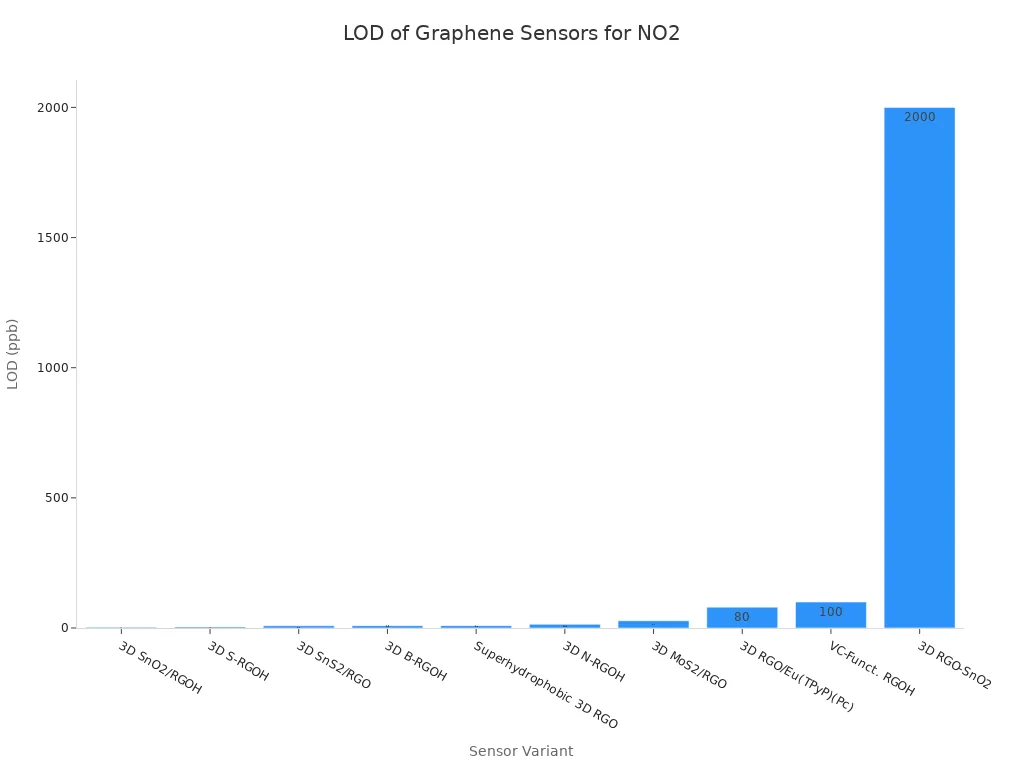
Graphene gas sensors can detect nitrogen dioxide (NO₂) at very low levels. The table below shows the detection limits for different sensor designs.
Graphene Sensor Variant | LOD (ppb) |
|---|---|
Superhydrophobic 3D RGO | 9.1 |
3D S-RGOH | 4.1 |
3D RGO-SnO₂ | 2000 |
3D SnO₂/RGOH | 2.8 |
3D MoS₂/RGO | 27.9 |
3D SnS₂/RGO | 8.7 |
3D N-RGOH | 14 |
3D B-RGOH | 9 |
3D RGO/Eu(TPyP)(Pc) | 80 |
VC-Funct. RGOH | 100 |
The best designs detect NO₂ at just 2.8 parts per billion. That level of sensitivity helps with environmental monitoring and workplace safety. You can catch dangerous gas leaks before they harm anyone.
Graphene bends without breaking. This makes it perfect for wearable health monitors. You can put a graphene sensor on your skin to track heart rate or sweat chemistry. It fits the curves of your body. It keeps working through thousands of bends and stretches.
Flexible graphene screens also show promise. You could roll up a display like paper. These uses are still mostly in research, but the commercial potential grows every year.
Graphite lubricates without oil. The weak forces between layers let them slide past each other smoothly. This dry lubrication works where liquid lubricants fail.
You can use graphite powder in extreme heat. It works as a lubricant up to about 1450°F (around 788°C). However, oxidation limits its safe use in air.
Graphite powder oxidizes between 400°C and 600°C, forming carbon monoxide and carbon dioxide. This breakdown means 400°C is the maximum safe temperature in an oxidizing environment.
Below that limit, graphite keeps machinery moving smoothly. You find it in high-temperature bearings, oven conveyors, and metal-forming equipment.
Graphite handles extreme temperatures without melting. This makes it valuable in foundries. You use graphite crucibles to melt metals like copper and aluminum. The crucible holds molten metal without breaking down.
Graphite molds also shape hot materials. The material resists thermal shock. It releases finished parts easily because of its natural slipperiness. These traits keep graphite essential in metal casting operations worldwide.
Adding a tiny amount of graphene to a polymer creates a much stronger material. A peer-reviewed study in ACS Nano reports that adding graphene platelets at just 0.1% by weight to epoxy produces a 40% increase in tensile strength. You get much better mechanical performance from a very small addition.
Graphene materials also boost electrical and thermal conductivity in composites. This makes them attractive for space parts, automotive components, and sporting goods. The challenge remains cost. Making enough high-quality graphene for large-scale manufacturing still costs more than traditional fillers.
Graphite offers a cheaper way to reinforce composites. You can add graphite powder to polymers at higher amounts without spending too much. The result improves stiffness and dimensional stability.
Graphite fillers also improve thermal and electrical conductivity in plastics. This makes them useful for electromagnetic shielding and static dissipation. For many industrial uses, graphite performs well enough at a fraction of the cost of graphene.
Graphite also plays a growing role in energy storage. You find it in lithium-ion battery anodes. The material stores lithium ions between its layers. This directly affects battery life and charging performance. Graphite remains the standard anode material because it balances cost, capacity, and cycle stability. Graphene research continues exploring ways to improve battery performance further, but graphite dominates production today.
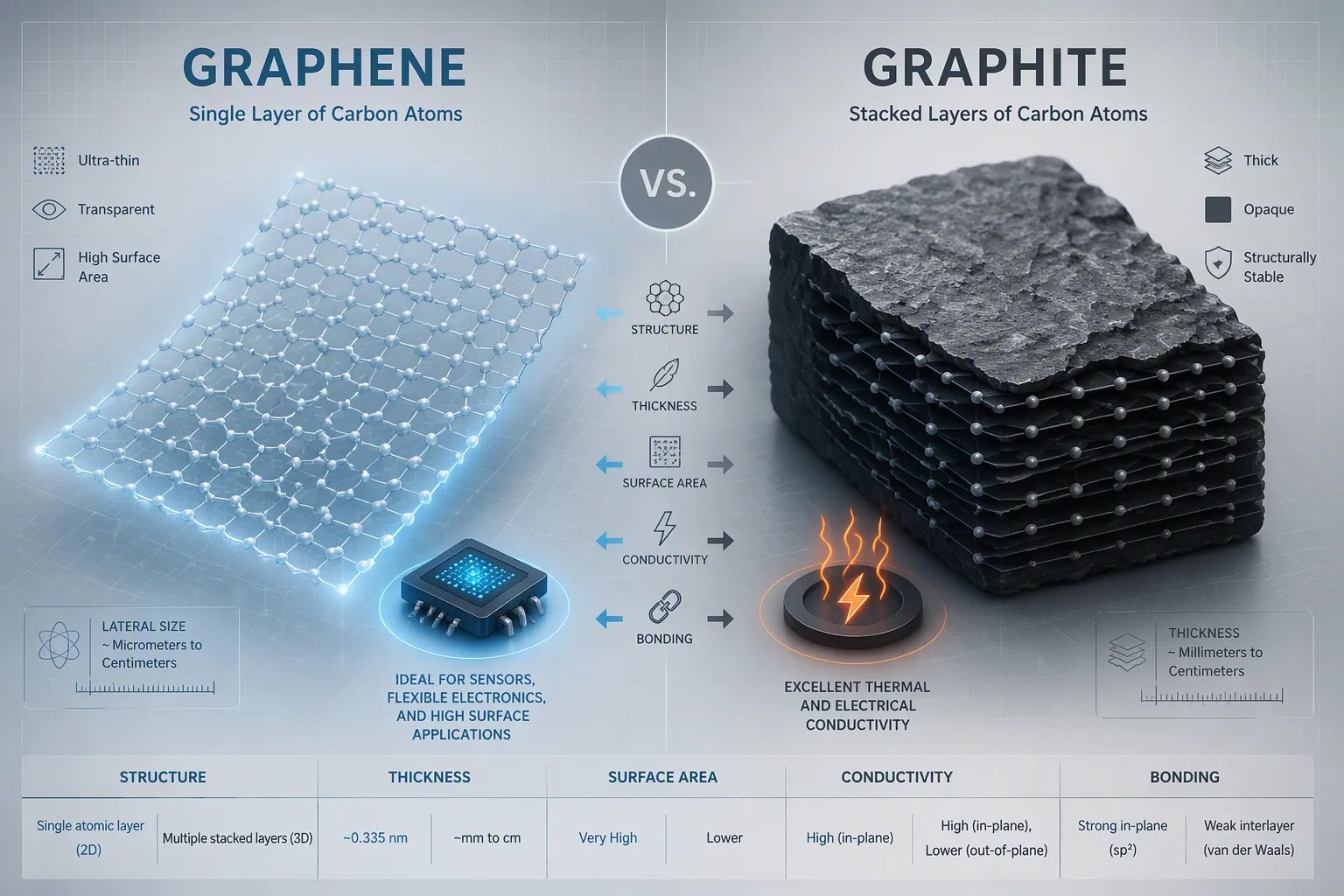
You have now seen how graphene and graphite differ at every level. The atomic structure drives their properties. Those properties determine which material fits your application. This final section pulls everything together into a clear decision guide. You will see direct comparisons, practical trade-offs, and a framework for choosing correctly.
Surface area matters more than you might think. It controls how a material interacts with its environment. Graphene offers an enormous surface area because every atom sits exposed on the surface. Graphite hides most of its atoms inside stacked layers.
Material | Specific Surface Area (m²/g) |
|---|---|
Graphene | ~2600 |
Graphite | 1 |
This difference explains why graphene excels in sensors and catalysis. A single gram of graphene offers roughly 2600 square meters of reactive surface. That same gram of graphite gives you only about 1 square meter. You can see why graphene detects gases at parts-per-billion levels while graphite cannot.
Transparency follows the same pattern. A single layer of graphene absorbs only 2.3% of visible light. You can see through it almost completely. Graphite appears black because stacked layers trap light. Reactivity also favors graphene. Its exposed atoms bond readily with other molecules. Graphite's surface chemistry stays limited to its outer layers.
Conductivity values tell a clear story. You need to know these numbers when comparing a graphene sheet vs. graphite sheet for your design.
Property | Graphene (Single Layer) | Graphite (Bulk) |
|---|---|---|
In- thermal conductivity | ~5000 W/m·K | 1500–2000 W/m·K |
Through- thermal conductivity | Not applicable | 10–100 times lower than in- |
Electrical conductivity | Ballistic, highest known | Direction-dependent, metal-like in- |
Graphene's thermal conductivity reaches about 5000 W/m·K in a suspended layer. That exceeds copper by more than ten times. Graphite sheets from manufacturers like DASEN deliver 1500–2000 W/m·K in-. These numbers make both materials excellent heat spreaders. The key difference lies in direction. Graphene conducts heat equally in all directions within its . Graphite conducts well along its layers but poorly through them.
You cannot simply buy graphene sheets off a shelf and integrate them into your product. The material presents serious handling obstacles. These challenges explain why graphene remains mostly in research settings.
Scalability of production methods: Chemical vapor deposition requires precise control of temperature, pressure, and gas flow. Maintaining uniformity becomes exponentially harder at larger areas. High temperatures of 900–1000°C limit substrate compatibility and raise energy costs.
Transfer process defects: Moving graphene from growth substrates to target surfaces introduces wrinkles, tears, and chemical contaminants at industrial scales.
Equipment limitations: Conventional coating equipment is not designed for atomically thin layers. Standard tools often damage the delicate graphene structure.
Quality control gaps: Lack of rapid, non-destructive testing methods prevents consistent quality assurance across large production runs.
Economic barrier: These issues drive production costs to $100–200 per square meter. That price sits far above acceptable commercial thresholds for most products.
These five challenges create a steep barrier. You must weigh them against graphene's superior properties before committing to this material.
Graphite presents none of these problems. You can source it from natural mines or synthesize it in furnaces. The material processes easily with standard equipment. You can grind it, press it, roll it, and die-cut it into any shape.
Thermal graphite sheets come in large rolls ready for production. Manufacturers like DASEN produce them at annual capacities of 6 million square meters. You get consistent quality batch after batch. The supply chain is mature and reliable. Costs stay low enough for high-volume consumer electronics.
This ease of manufacturing makes graphite the practical choice for most commercial applications. You sacrifice some peak performance but gain manufacturability, consistency, and cost savings.
Choose graphene when your application demands the absolute best performance. You need graphene for cutting-edge research and specialized high-performance products. The material's unique properties make it irreplaceable in certain contexts.
Specify graphene when you need single-layer sensitivity for chemical or biological detection. Its enormous surface area enables detection limits that graphite cannot approach. Choose graphene for flexible electronics where you need transparency combined with conductivity. The material bends without breaking and lets light pass through.
Graphene thermal pads offer another specialized use. Their vertically aligned structure delivers through- thermal conductivity around 80 W/m·K under compression. This makes them suitable for thin-gap applications where heat must move through the material's thickness. You would choose these pads when vertical heat transfer matters more than cost.
Budget for higher expenses when selecting graphene. Production costs remain high. Quality control requires specialized equipment. You must accept these trade-offs for the material's unmatched properties.
For most commercial thermal management needs, thermal graphite sheets offer the best balance of performance and cost. You should choose them when your primary goal is spreading heat laterally across a surface.
Select graphite sheets for smartphones, tablets, LED lighting, and power electronics. These devices generate heat in small areas. You need to spread that heat across a larger surface for dissipation. Flat-rolled graphite sheets excel at this task. Their in- thermal conductivity of 1500–2000 W/m·K moves heat efficiently sideways.
Choose graphite when you need proven supply chains and predictable costs. The material has decades of industrial history. You can source it reliably at scale. Manufacturers like DASEN provide ISO9001-certified production with consistent quality. You get dependable performance without premium pricing.
Graphite also suits applications requiring mechanical flexibility and easy processing. You can wrap graphite sheets around curved surfaces. You can die-cut them into complex shapes. The material integrates smoothly into existing manufacturing lines.
The decision ultimately comes down to your priorities. If you need the ultimate in- thermal conductivity and can tolerate high costs, graphene serves you well. If you need reliable, cost-effective heat spreading at scale, thermal graphite sheets deliver the best value. Most engineers and buyers will find that graphite meets their needs today. Graphene remains the future-forward choice for those pushing technological boundaries.
The graphene sheet vs. graphite sheet comparison comes down to more than thickness. Their atomic structures create entirely different physical properties. Graphene delivers exceptional properties for cutting-edge sensors and flexible electronics. Thermal graphite sheets provide reliable, cost-effective heat spreading for today's smartphones and LEDs. Graphene thermal pads solve vertical heat transfer challenges that bulk graphite cannot.
As graphene production scales, adoption will grow. Graphite will not disappear. Both materials will coexist, serving distinct niches. Evaluate your specific needs—thermal conductivity direction, cost, flexibility—against these properties. Choose the sheet that fits your design constraints and budget. Your informed selection determines your product's performance and profitability.
Not directly. A graphite layer spreads heat sideways, while a graphene thermal pad moves heat upward. You must match the material to your heat flow direction. Misusing either reduces cooling performance.
Graphene production costs $100–200 per square meter. Graphite costs far less, around $0.50–$3.50 per kilogram for raw material. The gap remains wide due to graphene's complex manufacturing.
Scalability. Making defect-free graphene over large areas requires precise equipment and high temperatures. This keeps costs high and limits availability to research and niche applications.
No. For bulk heat spreading, a thermal graphite sheet offers excellent in- conductivity at low cost. Graphene only outperforms it in specialized uses like single-layer sensing or thin-gap vertical heat transfer.
Check the supplier's specifications for single-layer percentage and thickness. True graphene measures about 0.335 nm per layer. Multilayer products above 10 layers behave more like graphite. Ask for Raman spectroscopy data.
Not entirely. Both materials will coexist. Graphite dominates cost-sensitive, high-volume products. Graphene serves specialized premium designs. Your choice of sheet depends on thermal path, budget, and performance needs.
Automotive electronics, high-power LED lighting, and laptop processors use graphene thermal pads. These applications require vertical heat transfer in thin gaps. The higher cost is justified when thermal performance is critical.