
Views: 0 Author: Site Editor Publish Time: 2026-10-06 Origin: Site


Three key trends shape the synthetic graphite sheet market in 2026: more demand from EV heat control, new ultra-thin sheets with high conductivity, and growth in 5G and consumer electronics. The synthetic graphite sheet market was worth USD 484 million in 2025, and it is expected to hit USD 997 million by 2035. This growth makes 2026 a very important year. These trends open doors for high-performance materials and eco-friendly options. As the market grows, demand, prices, and competition will change. Each trend calls for new material specs and supply chain updates. Companies must act on these shifts to grow. In 2026, these three trends come together to push the synthetic graphite sheet market ahead.
Synthetic graphite sheets help cool electric vehicle batteries. They spread heat quickly and prevent dangerous hot spots.
Ultra-thin sheets, as thin as 0.025 mm, fit into smartphones and foldable devices. They keep processors cool without using up extra space.
5G base stations and high-power electronics need better heat control. Synthetic graphite sheets can handle this strong heat.
The market for these sheets will grow from $484 million in 2025 to $997 million by 2035. This growth opens up new chances for businesses and investors.
Manufacturers can cut costs by using roll-to-roll processing and renewable energy. This also makes production better for the environment.
Phone makers now put synthetic graphite sheets in most high-end smartphones and electric cars. This pattern will keep going as these devices become stronger.
Companies that put money into research and working with others will come out on top in this growing market. DASEN, thanks to its big production size and patents, shows this well.
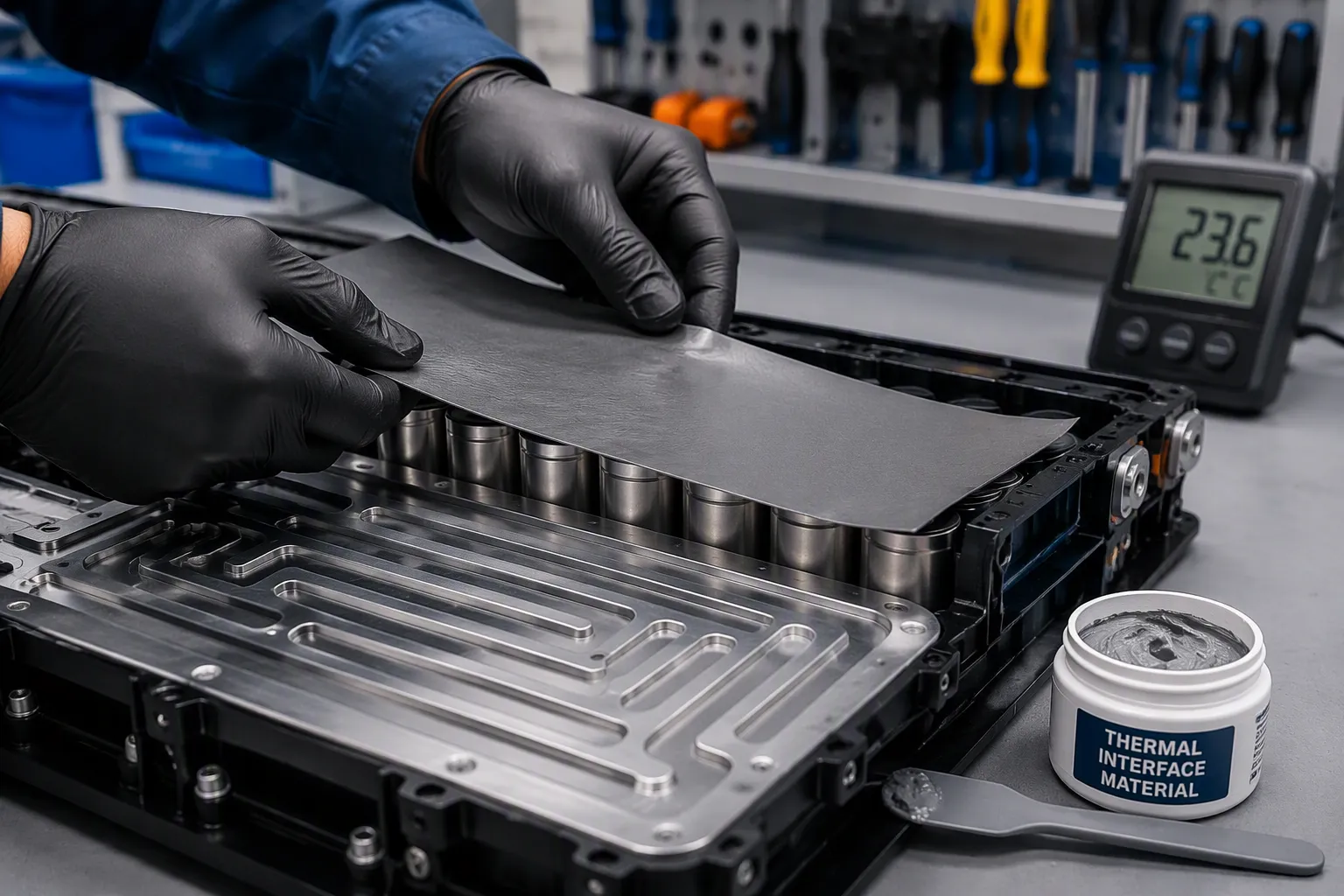
Electric vehicle battery packs create a lot of heat during fast charging and high-power discharge. Good lateral heat spreading stops hot spots that can damage cells and shorten their life. Synthetic graphite sheets provide in- thermal conductivity between 1500 and 2000 W/m·K, while through- values stay low at 5–10 W/m·K. This anisotropic behavior spreads heat across the pack and insulates layers vertically. Such high-performance thermal management directly reduces thermal runaway risks. Patented designs by companies like NeoGraf Solutions show that sheets above 1500 W/m·K in- dissipate heat quickly and prevent cascading failures. Engineers increasingly specify synthetic graphite sheets for their excellent safety properties and consistent performance. The artificial graphite sheet offers the right balance of high conductivity and insulation for battery modules.
Direction of Heat Flow | Thermal Conductivity Range (W/m·K) |
|---|---|
In- (X-Y axis) | 1500 – 2000 |
Through- (Z axis) | 5 – 10 |
Synthetic graphite sheets rarely work alone in battery packs. Manufacturers combine them with thermal interface materials (TIMs) to fill microscopic gaps and improve contact. The graphite sheet provides lateral spreading, while the TIM ensures efficient heat transfer from cells to cooling plates. This integrated solution meets rising demand for compact yet powerful battery thermal systems. The synthetic graphite sheet market has seen expanded use of multi-layer designs that boost overall heat dissipation. Such configurations support higher energy densities and longer cell life.
Global battery-electric vehicle sales continue to climb sharply. Industry forecasts for 2026 project record volumes, with annual increases outpacing previous years. Every 10% growth in EV output correlates to an approximate 8–12% uptick in graphite sheet demand. This strong correlation directly ties market growth to EV adoption. DASEN, with its annual production capacity of 6 million square meters, supplies sheets for major battery manufacturers. The company's capacity supports the industry's expansion and ensures stable supply.
As EV production scales, battery packs require more thermal management material per vehicle. Larger packs and higher energy densities increase heat output, driving demand for synthetic graphite sheets. The graphite sheet market expects significant growth from this sector in 2026. Opportunities abound for suppliers that invest in R&D to improve performance and reduce costs. DASEN holds more than 10 patents and focuses on continuous innovation. This investment in r&d strengthens its position in high-growth sectors.
Production of synthetic graphite sheets depends on raw materials such as polyimide film. Polyimide film prices fluctuate due to petrochemical feedstock volatility. Energy costs also influence manufacturing expenses, as the process is electricity-intensive. These cost pressures affect pricing across the synthetic graphite sheet market. Manufacturers pursue long-term supply contracts and efficiency gains to stabilize costs. DASEN’s ISO9001-certified processes help reduce waste and improve yield.
Synthetic graphite sheets face competition from graphite foils, ceramic composites, and phase change materials. Graphite foils offer lower thermal conductivity at a lower price point. Ceramic composites suit specific high-temperature applications, while phase change materials absorb heat during spikes. This competition forces synthetic graphite sheet producers to differentiate through higher conductivity, thinner profiles, and custom engineering. Some end users shift to PTFE or mica-based products in less demanding environments. However, for high-performance thermal management in EVs, synthetic graphite sheets remain the preferred choice due to their proven safety and reliability. The trends toward eco-friendly production and sustainability initiatives also push manufacturers to adopt renewable energy sources. DASEN actively pursues sustainability initiatives to align with these industry shifts. Energy efficiency improvements in its production lines further support long-term growth.
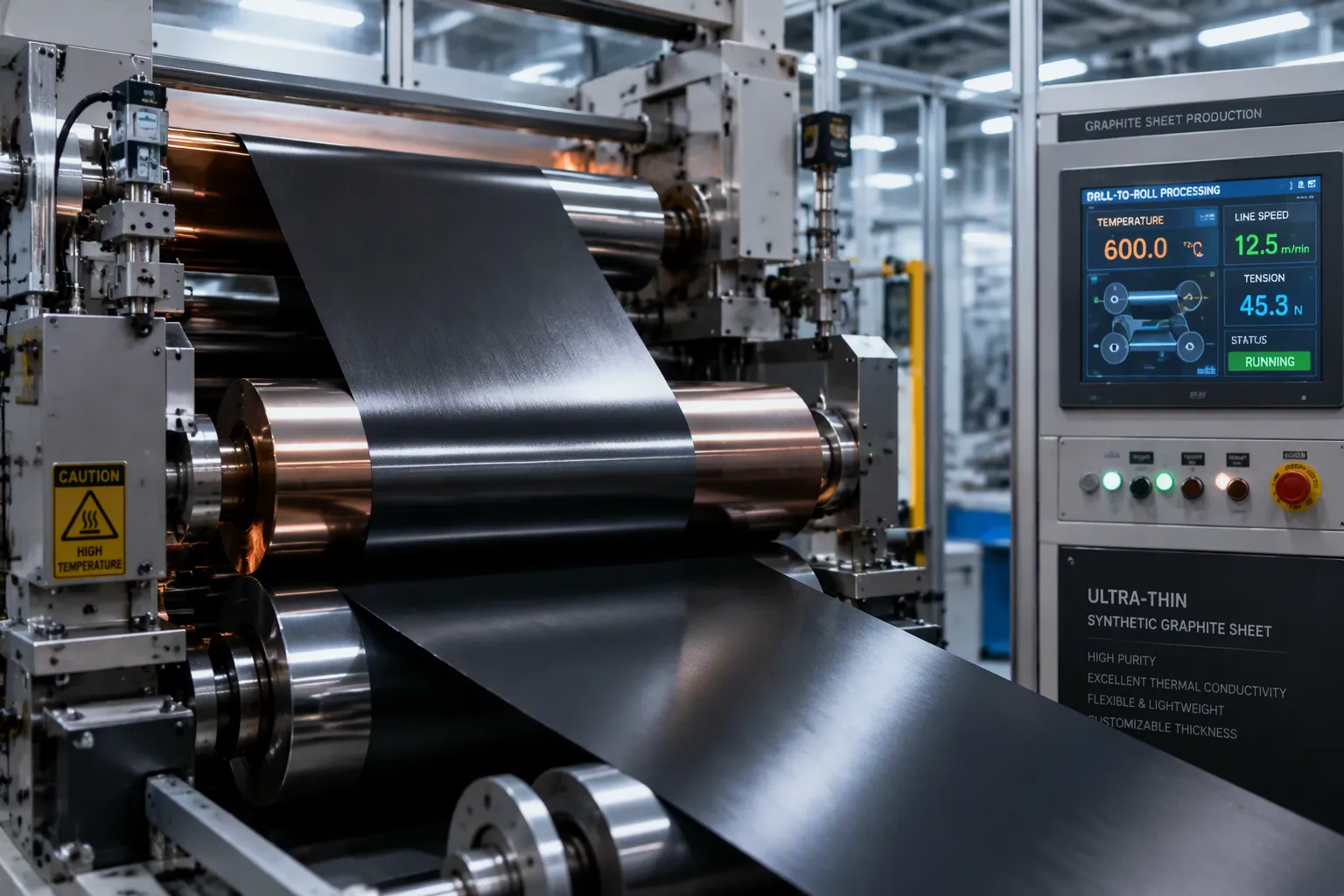
Manufacturers now use roll-to-roll processing to make synthetic graphite sheets much thinner than before. This continuous method replaces batch processing, allowing precise thickness control down to micrometer levels. The process feeds polymer precursor films through high-temperature rollers, achieving uniform carbonization and graphitization across long production runs. Companies like DASEN hold more than 10 patents in advanced graphite sheet manufacturing, with completely independent intellectual property rights. These patents cover proprietary roll-to-roll configurations that reduce defects and improve yield rates. The synthetic graphite sheet market benefits from these process improvements through lower production costs and consistent quality. Engineers can now specify thinner sheets without sacrificing mechanical integrity or thermal performance.
High-temperature graphitization of polymer precursors at temperatures reaching 2900°C produces in- thermal conductivity up to 2000 W/mK. This extreme heat treatment aligns carbon crystallites into highly ordered structures that conduct heat efficiently. A commercially available synthetic graphite sheet designated T68 achieves 1500 W/mK in the x-y axes, proving this threshold works in practical, market-ready materials. Encapsulated thermal pyrolytic graphite inserts bonded via carbide-forming metal interlayers such as titanium or zirconium exceed 1500 W/mK for semiconductor thermal levelers. These innovations push the boundaries of what designers expect from thin thermal management materials. The graphite sheet market now offers products that combine ultra-thin profiles with conductivity levels once reserved for thicker solutions.
Innovation Mechanism | Reported Thermal Conductivity | Key Process/Component |
|---|---|---|
High-temperature graphitization of polymer precursors | Up to 2000 W/mK (in-) | Processing temperature ≥2900°C |
Encapsulated thermal pyrolytic graphite inserts | >1500 W/mK (in-) | Bonded via carbide-forming metal interlayers (Ti, Zr) for semiconductor thermal levelers |
Leading manufacturers incorporate synthetic graphite sheets in 87% of premium smartphones to prevent thermal throttling and improve battery life. This high penetration rate demonstrates the material's essential role in modern device design. Foldable smartphones present unique challenges because hinges create complex thermal paths that require flexible, thin solutions. Wearable devices similarly demand lightweight materials that fit within tight dimensional constraints. The synthetic graphite sheet market responds with products tailored to these specific form factors. Product innovation continues as device makers request custom shapes and thicknesses for next-generation designs.
Modern smartphones and wearables allocate less than 0.5mm gaps for thermal management materials. Ultra-thin synthetic graphite sheets fit within these confined spaces while spreading heat effectively across device surfaces. Designers layer these sheets with copper foil or thermal interface materials to create composite solutions that maximize heat dissipation. The anisotropic nature of synthetic graphite sheets directs heat laterally away from processors and batteries toward cooler regions. This behavior prevents localized hot spots that trigger thermal throttling and degrade user experience. High-performance thermal management in constrained spaces drives demand for thinner, more conductive materials.
The ultra-thin, high-conductivity segment of the synthetic graphite sheet market grows at 15–20% annually through 2026. This growth rate outpaces the overall market expansion, reflecting strong demand from premium electronics manufacturers. Investment in r&d accelerates as companies compete to deliver thinner sheets with higher conductivity. The market growth attracts new entrants while established players expand production capacity. DASEN's annual capacity of 6 million square meters positions the company to capture this expanding segment. Sustainability initiatives and eco-friendly production methods increasingly influence purchasing decisions among environmentally conscious OEMs.
Top smartphone manufacturers now specify ultra-thin synthetic graphite sheets as standard components in flagship devices. Adoption rates among leading OEMs approach universal coverage for premium models, with expansion into mid-range devices accelerating. These manufacturers value the combination of thin profiles, high conductivity, and reliability that synthetic graphite sheets provide. The trends toward foldable designs and 5G connectivity further drive adoption as thermal demands increase. Opportunities exist for suppliers who invest in r&d to develop customized solutions for specific device architectures. The graphite sheet market anticipates continued growth as OEMs prioritize thermal performance in product differentiation. Renewable energy adoption in manufacturing processes also appeals to sustainability-focused brands seeking eco-friendly supply chains.
5G base stations use two to three times more power than 4G MIMO antennas. A standard 64-antenna array gives off over 500 W of heat, about the same as a small space heater. Heat flux density hits 300 to 800 W/m², packed inside outdoor enclosures. The Arrhenius model shows that semiconductor failure rate doubles for every 10°C rise. These conditions call for materials that spread intense heat fast. The synthetic graphite sheet provides primary heat diffusion for local high heat flux areas before secondary cooling systems activate. Usage area of graphite sheets on high-power server motherboards has grown from less than 50 cm² to 200–350 cm², directly reflecting increased demand for heat dissipation. Single-layer thick graphite sheets up to 100 μm offer lower thermal resistance and avoid delamination risks of multi-layer composites.
Higher frequencies in mmWave bands demand consistent thermal performance across all operating bands. Capacitors require high Q values, low ESR, and precise tolerances to maintain signal integrity. A handset test demonstrated this challenge clearly: when battery temperature reached 45.4°C, the device switched from 5G to 4G LTE to prevent overheating. Thermal management is critical for maintaining 5G connectivity and user experience. The synthetic graphite sheet market responds with materials that maintain consistent thermal conductivity across varying frequency conditions. These trends push market growth forward as 5G infrastructure expands globally.
Higher-performance processors in laptops, gaming consoles, and smartphones generate more heat inside confined spaces. Synthetic graphite sheets provide thermal conductivity of 900 to 1950 W/m·K, far exceeding copper at approximately 400 W/m·K. Ultra-thin profiles down to 0.025 mm conserve valuable space inside densely packed devices. Mechanical flexibility allows direct contact with processors while remaining lightweight. High-performance thermal management becomes essential as processor power increases. These properties prevent performance degradation and device failure.
Replacement cycles for laptops and gaming consoles create sustained demand for thermal materials. Each generation pushes processor performance higher, increasing heat output. Consumers upgrade devices as performance benchmarks rise. This cycle drives growth for the synthetic graphite sheet market. The expansion of 5G networks accelerates upgrade rates as consumers seek compatible devices that maintain connectivity.
Asia-Pacific manufacturing hubs drive expansion in 5G and consumer electronics production. This region accounts for the majority of global electronics assembly. The synthetic graphite sheet market benefits from proximity to major OEMs and their supply chains. High-growth sectors in telecommunications and consumer electronics fuel continued growth for thermal management materials.
New suppliers enter the market as demand grows, creating pricing pressures. Established manufacturers invest in r&d to differentiate through high-performance products and product innovation. The graphite sheet market sees increasing focus on energy efficiency and renewable energy in production processes. Eco-friendly manufacturing methods appeal to sustainability-conscious brands. Opportunities exist for suppliers that combine technical excellence with sustainable practices. DASEN, with ten patents and 6 million square meters annual capacity, maintains a strong position in high-growth sectors.
These three trends converge to drive the synthetic graphite sheet market toward USD 997 million by 2035. EV thermal management, ultra-thin innovations, and 5G expansion create tailwinds for manufacturers and buyers. Stakeholders should secure supply partnerships, invest in r&d for thinner sheets, and monitor raw material sourcing. Investment analysis reveals transportation electrification CAGR exceeding 20% through 2030, electronics miniaturization supporting premium pricing, and energy storage sustaining long-term demand. The synthetic graphite sheet market benefits from regulatory standards. The graphite sheet market rewards product innovation and partnerships. DASEN, with 6 million sqm capacity, 10+ patents, and ISO9001 certification, serves this growth. The company pursues sustainability initiatives and eco-friendly methods, including renewable adoption. Market opportunities in high-growth sectors position stakeholders for long-term industry expansion through 2027-2030. High-performance synthetic graphite sheet adoption rises.
Synthetic graphite sheets have better heat movement, up to 2000 W/m·K in-. They offer more steady quality and purity than natural graphite. To make them, manufacturers heat polymer films to very high temperatures. This turns them into graphite with even crystal structures. This process gives steady heat control for tough electronics and EV uses.
These sheets spread heat sideways across battery packs. This stops hot spots that cause failures. Their special properties move heat well in- but block it through-. This directional heat control keeps cell temperatures even during fast charging and high-power discharge. The material's high heat movement greatly lowers the risk of thermal events.
Manufacturers now make synthetic graphite sheets as thin as 0.025 mm using roll-to-roll processing. These ultra-thin sheets fit inside gaps under 0.5 mm in smartphones and wearables. Even though they are very thin, they still move heat above 1500 W/m·K. This mix allows effective heat spreading in very compact device designs.
Electric vehicle makers, consumer electronics producers, and 5G infrastructure builders are the main users. EV battery heat control needs high-performance heat spreading. Smartphones and laptops require thin, bendable solutions for processor cooling. 5G base stations need materials that handle high power density. These sectors create big market chances for material suppliers.
The making process needs high-temperature graphitization up to 2900°C, which uses a lot of electricity. Raw material costs, especially polyimide film, change with petrochemical prices. These factors affect final product pricing. Makers seek energy efficiency gains and long-term supply deals to keep costs steady. Process improvements like roll-to-roll production help cut waste and boost yield.
Makers are using more eco-friendly production methods and sustainability efforts. The material itself helps electronics save energy by stopping thermal throttling and making devices last longer. Some producers now run their facilities with renewable energy. These practices lower the carbon footprint of graphite sheet making while meeting demand from eco-conscious OEMs.
Synthetic graphite sheets move heat between 900 and 1950 W/m·K, while copper moves about 400 W/m·K. This big advantage lets graphite sheets spread heat better even in thinner profiles. The material also weighs less than copper, making it great for portable electronics. These traits explain its growing use in heat management applications.
Trusted makers hold ISO9001 international quality management certification. This standard ensures steady production processes and reliable product quality. Companies like DASEN own many patents showing their focus on innovation and quality control. Buyers should check certifications and production abilities when picking suppliers for critical heat management uses.