
Views: 0 Author: Site Editor Publish Time: 2026-04-06 Origin: Site


You want to know which material is best in 2026. Carbon fiber is the top pick for strength and lasting power. It also works well for high performance. Market numbers say carbon fiber reinforced plastic will be worth $12.12 billion in 2026. It will grow fast. You get great reliability and value when you compare Carbon Fiber vs Forged Plastic. You need clear answers for your use. This blog gives you advice based on facts.
Carbon fiber is very strong and lasts a long time. It is great for things that need to work really well. Forged plastic can take hits without breaking. It also costs less, so it is good for things we use every day. Carbon fiber weighs less than metal and most plastics. This helps cars and electronics use less energy. Carbon fiber costs more at first. But it lasts longer and can save money on fixing things later. Forged plastic is simple to make. It can be shaped in many ways, so it works for many things. Both materials are becoming better for the environment. People are finding new ways to recycle them and make them in eco-friendly ways. Pick carbon fiber if you need something very strong and high-performing. Choose forged plastic if you want to save money and recycle. DASEN’s carbon fiber products help control heat very well. This makes them good for electronics and factories.
When you compare carbon fiber vs forged plastic, you see a clear winner in tensile strength. Carbon fiber gives you unmatched strength for its weight. You can trust it to handle heavy loads and stress without breaking. This makes carbon fiber the top choice for high-performance needs. Forged plastic offers good strength, but it cannot match the tensile strength of carbon fiber. If you want the best strength-to-weight ratios, carbon fiber stands out every time.
You want your products to last. Carbon fiber vs forged plastic shows different results for impact resistance. Forged plastic absorbs shocks well and resists cracking under sudden force. This makes it a smart pick for parts that face frequent bumps or drops. Carbon fiber, while strong, can be more brittle under sharp impacts. Still, its overall strength and durability make it a favorite for high-performance uses where you need both toughness and reliability.
Weight matters in every industry. Carbon fiber vs forged plastic both offer lightweighting, but carbon fiber leads the way. You get a material that is much lighter than metal and even lighter than most plastics. This helps you save energy and boost efficiency. For example, the BMW i3 and i8 use carbon fiber reinforced plastic to cut weight and improve performance. Tesla also uses carbon fiber to push the limits of speed and battery life. Lightweighting with carbon fiber means you can design faster cars, longer-lasting electronics, and more efficient machines.
You want top performance from your products. Carbon fiber vs forged plastic gives you different results. Carbon fiber delivers high-performance results in sports cars, s, and electronics. Its low weight and high strength let you push the limits of design. Forged plastic helps you save on costs and still get good performance, but it cannot match the high-performance edge of carbon fiber. When you need the best mix of strength, weight, and performance, carbon fiber is the clear leader.
Cost is always a key factor. Carbon fiber vs forged plastic shows a big gap in price. Carbon fiber costs more upfront. The market for carbon fiber reinforced 3D printing polymers is growing fast, with values expected to double by 2033. Forged plastic stays much cheaper, making it a good choice for budget projects. If you want the best strength and performance, you pay more for carbon fiber. If you want to save money, forged plastic gives you value.
Think about the long-term value. Carbon fiber vs forged plastic shows that carbon fiber products last 3-5 times longer than regular plastic. You pay more at first, but you save on repairs and replacements. Forged plastic costs less to make, but you may face higher maintenance costs over time. For some parts, the raw material cost for forged plastic is less than $1.50, while carbon fiber parts can cost over $150. If you want lasting value and less hassle, carbon fiber is a smart investment.
Tip: For electronics and thermal management, DASEN’s carbon fiber products give you the best mix of strength, weight, and performance. You get reliable, high-performance solutions that last.
Carbon fiber is used a lot in cars and s. Car makers use carbon fiber for hoods, roofs, and panels. These parts make cars lighter and stronger. Lighter cars handle better and are safer. BMW, Lexus, and Nissan use carbon fiber to lower the center of gravity. This helps cars perform better. Lamborghini uses forged carbon fiber for mirror caps and air vents. This material lasts long and saves money. Ferrari and Bugatti put carbon fiber trims on dashboards and doors. Racing seats and steering wheels made from carbon fiber help cars go faster. Electric cars use carbon fiber to balance battery weight. BMW i3 and i8 show how carbon fiber chassis help cars go farther. Tesla uses carbon fiber inside cars and may use it for full chassis soon. Ford and Audi look at recycled carbon fiber to make cars greener and cheaper. These new ideas give you safer, lighter, and better cars.
You want your devices to stay cool and last longer. Carbon fiber and forged plastic are important in electronics. DASEN makes graphite heat products and carbon fiber solutions. These products move heat away fast and keep devices safe. DASEN’s products are used in phones, tablets, and laptops. People ask about graphite sheets and carbon fiber at shows. Many want to know how these products work. DASEN’s skills mean you get good heat solutions. You can trust their products to protect your devices and make them work better. Forged plastic is a cheaper choice for many goods. You find it in cases, covers, and other things. These items are tough and light. You get good value and strong products for daily use.
You need strong materials for hard jobs. Carbon fiber and forged plastic are used in many industries. Carbon fiber is found in medical tools, energy gear, and telecom machines. Its strength and light weight help make safer and better machines. DASEN’s carbon fiber products move heat away well, so they are good for industry. Graphite sheets are used in batteries and lights. These keep machines cool and working right. Forged plastic is a cheap choice for many parts. You use it for housings, connectors, and covers. It stands up to damage and lasts a long time. You pick the best material for your job—carbon fiber for top performance, forged plastic for saving money.
Tip: If you want the best thermal management for electronics or industrial equipment, DASEN’s carbon fiber and graphite solutions deliver unmatched reliability and performance.
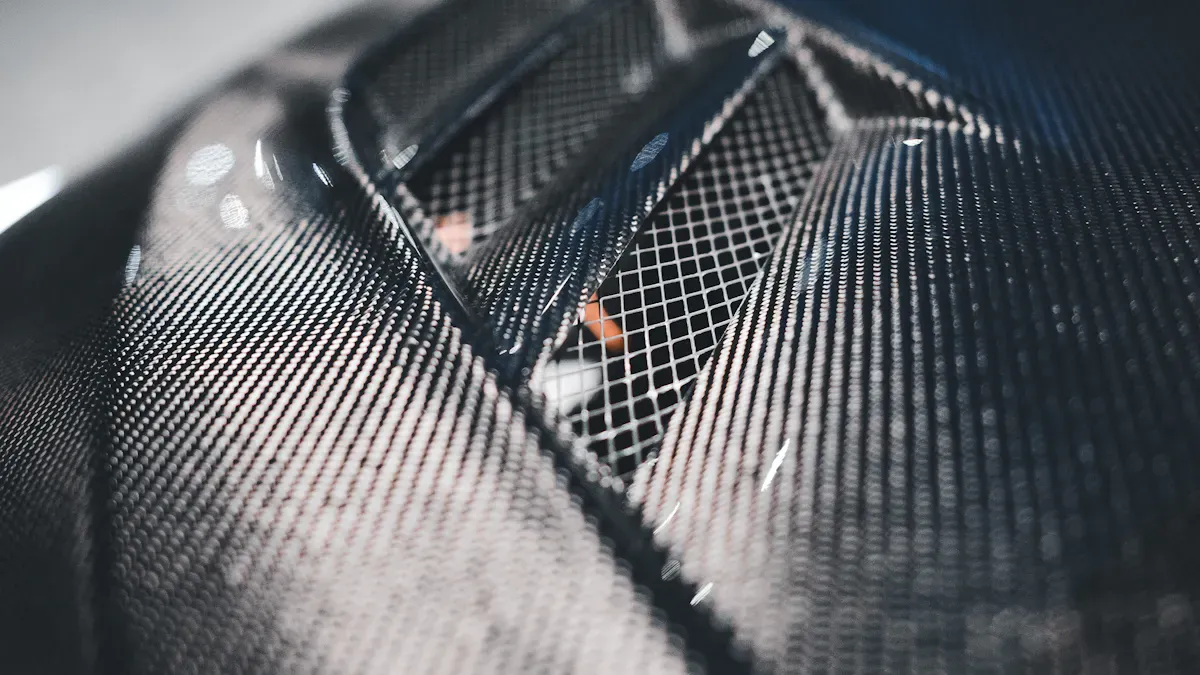
Image Source: pexels
You want your products to be strong and stiff. Carbon fiber is very strong for how light it is. You can make things lighter without losing strength. This helps you build machines that are fast and work well. Carbon fiber can hold heavy things and keep them safe. It does not rust, so your parts last longer. The woven look of carbon fiber makes your products look cool.
Carbon fiber is strong and stiff, so things work better.
You can make things lighter, which helps them move faster.
It does not rust, so it lasts a long time.
The woven look makes your products look special.
You need your products to work really well. Carbon fiber is very stiff and strong. People use it in sports cars, s, and electronics. It helps these things go faster and work better. Carbon fiber parts are tough and last a long time, even in hard places.
You want your devices to stay cool. DASEN’s carbon fiber helps move heat away from electronics and machines. Graphite sheets pull heat out fast, so your devices stay safe. DASEN’s carbon fiber keeps things strong and working longer. They use new ways to make their products better. DASEN gives you good results and products that last.
Disadvantage | Description |
|---|---|
High Production Costs | You pay more for the materials and energy to make carbon fiber. |
Disadvantage | Description |
|---|---|
Environmental Impact | Making carbon fiber uses a lot of energy and makes pollution. |
Waste Management | You have to be careful with waste so you do not hurt the t. |
Difficulty in Recycling | It is hard to recycle carbon fiber, so getting rid of it is tough. |
New ways to make carbon fiber are coming. Graphene-infused carbon fiber is even stronger and lighter. It also handles heat better. This makes cars safer in crashes and helps cool things down. Smart carbon fiber has sensors inside. These sensors tell you if something is wrong right away. This keeps cars and machines safe and working well.
Graphene-infused carbon fiber is stronger and handles heat better.
Smart carbon fiber lets you check if things are safe in real time.
People want to help the t. Greener carbon fiber is becoming popular. Some companies use plants or old carbon fiber to make new products. They are making new ways to recycle carbon fiber. Car makers are starting programs to reuse old carbon fiber. Better recycling means less waste and more new uses. This helps the t and follows new rules.
New recycling lets you use old carbon fiber again.
Car makers work on programs to reuse carbon fiber.
Better recycling helps the t and saves resources.
Tip: Pick DASEN’s carbon fiber for the best cooling, strength, and eco-friendly choices in 2026.
You want to save money and get good results. Forged plastic is a smart choice for saving money. You pay less for the material and making parts. Many companies pick forged plastic for things that do not need to be super strong. You can make lots of parts at once and keep costs low. This material helps you spend less but still get good quality.
You need things that can take drops and hits. Forged plastic soaks up shocks and does not crack easily. You get tough parts that last through everyday use. Forged plastic works well for cases, covers, and housings. You can count on it to keep your devices and tools safe from sudden bumps.
You care about the Earth. Forged plastic uses less energy to make than metals or forged carbon fiber. Many types of forged plastic can be recycled. This helps you make less trash and reach green goals. Companies now use recycled forged plastic in new things. You help nature and follow eco-friendly rules.
You need to know what forged plastic cannot do. Forged plastic is not as strong as forged carbon fiber. If you need something very strong, forged plastic might not work. It is tough, but it can crack or break if you put too much weight on it. Pick forged carbon fiber when you need the most strength and best performance.
You want your products to look special. Some people think forged plastic is not as fancy. They may believe it is not as strong or cool as forged carbon fiber. Forged plastic is good for saving money, but forged carbon fiber gives your product a high-tech look and trusted strength.
Forged carbon fiber is different because of its layers. It is made from special carbon fiber weaves and resins. This design makes it very strong and tough. The layers help it handle stress and keep its shape under pressure. You can use forged carbon fiber for parts that must be strong and light.
You see forged carbon fiber in cars, s, and electronics. New ways of making it mix old forging with new composite methods. This makes forged carbon fiber great for high-performance jobs. You get strength, low weight, and parts that last a long time. People now like forged carbon fiber for its strength-to-weight ratio and toughness. You can use it for racing seats, dashboards, and heat control solutions.
You want the best cooling and strength. DASEN puts forged carbon fiber in its products for electronics and industry. You get good heat control and strong parts. DASEN knows how to use forged carbon fiber and graphite sheets to fix cooling and strength problems. You can trust DASEN to give you advanced forged composite products that work for you in 2026.
Tip: Pick forged carbon fiber for top strength, toughness, and performance. DASEN’s products help you stay ahead in technology and efficiency.
You want to pick the best material for your project. It helps to see how carbon fiber and forged plastic match up on important things. The table below shows you the main points for 2026.
Metric | Carbon Fiber | Forged Plastic |
|---|---|---|
Strength | Very high (especially with CCF) | Moderate to high |
Weight | Ultra-lightweight | Lightweight |
Excellent (with proper design) | Good | |
Impact Resistance | High, but can be brittle | Very high, absorbs shocks well |
Cost | High | Low |
Manufacturing Flexibility | Good, but needs precise engineering | Excellent, easy to mold |
Surface Finish | Premium, woven look | Smooth, less premium |
Sustainability | Improving, recycling advances | High, many recyclable options |
Use in Automotive Accessories | Top-tier, premium parts | Widely used, cost-effective |
Application Range | Engineering, space, electronics | Consumer goods, automotive, industry |
You can see carbon fiber is best for strength, weight, and looks. Forged plastic is better for price, shock resistance, and being green. Both materials are important for cars and engineering.
If you need top performance, carbon fiber is the best. You find it in electric cars, sports cars, and big engineering jobs. BMW i3 and Audi e-tron use carbon fiber for their passenger cells and roofs. This makes the cars lighter and safer. Carbon fiber wheels help cars go faster. Battery packs and motor parts use carbon fiber to get more power and range. Hydrogen fuel tanks use carbon fiber to hold high pressure safely. When you want the best for cars or engineering, carbon fiber is the way to go.
If you want to save money but still get good parts, pick forged plastic. You see it in car parts, things people use every day, and factory machines. It costs less to make and buy. You can shape it into many forms for different uses. Forged plastic gives you strong parts that do not break easily. You get good value and parts you can trust without spending too much.
If you care about nature, forged plastic is a good choice. Many types can be recycled. Companies use old forged plastic to make new things. This helps you make less waste and meet green goals. Carbon fiber is getting better too. New ways to recycle and make it help the t. You see more recycled carbon fiber in car parts and engineering. Both materials are moving toward being greener, but forged plastic is the best for the environment right now.
You want to know which material fits your needs. Here is an easy guide to help you choose:
Pick carbon fiber if you need:
The most strength and stiffness
Very light parts
A fancy look and feel
High-performance car or engineering parts
Great cooling (DASEN’s graphite and carbon fiber are best)
Pick forged plastic if you need:
Low cost and easy making
High shock resistance
Many shapes and sizes
Green, recyclable choices
Everyday car parts or things people use
Think about how strong your parts must be, your budget, and if you want to help the t. Look at the shape and size you need. Think about how much weight matters. If you want the best for cars or engineering, carbon fiber is the top pick. If you want to save money and be green, forged plastic is the smart choice.
Tip: For electronics, car parts, and engineering, DASEN’s carbon fiber and graphite products help you do better in 2026.
You want your product to be the best it can be. In 2026, carbon fiber is ahead because it is very strong and light. More cars and s use carbon fiber now. Experts say this market will grow and change a lot. If you need high performance, pick carbon fiber. If you want to save money or help the t, choose forged plastic. Think about what is most important to you—how well it works, how much it costs, or if it is good for the Earth. The future will have smarter materials, better recycling, and new ways to make things stronger and lighter.
Carbon fiber is very strong and light. This helps you make things that go fast. It also helps them last a long time. You see carbon fiber in sports cars, s, and electronics. People use it when they need top performance.
Forged plastic does not break easily if dropped. It can take hits and shocks. You can use it for cases, covers, and parts. It works well for many everyday things and in factories.
Think about what you want your product to do. If you need something strong and light, pick carbon fiber. If you want to save money and need more shapes, choose forged plastic. Think about how you will use your product.
Carbon fiber helps keep things cool. DASEN’s graphite sheets move heat away from devices. This keeps electronics safe and working longer. It stops them from getting too hot.
Forged plastic is good for the t. Many types can be recycled. You can make products that meet green goals and cut waste. Companies use old forged plastic to make new things.
DASEN’s products are used in electronics, cars, medical tools, and energy gear. You can make things that need to stay cool and last long. DASEN helps you use new technology.
You can use both materials together. Use carbon fiber for strength. Use forged plastic for more flexible parts. Mixing them helps you balance cost, strength, and being green.
Tip: Pick your material based on what your design needs. You get better results when you focus on what matters most for your project.