
Views: 0 Author: Site Editor Publish Time: 2026-10-13 Origin: Site


Your newest smartphone slows down its performance after just 10 minutes of gaming. The problem? Heat. The answer might not be a big metal heatsink, but a film thinner than a human hair.
Synthetic graphite sheets have in- thermal conductivity over 1500 W/mK. Copper only reaches about 400 W/mK, and aluminum around 200 W/mK. This high conductivity makes graphite heat spreaders perfect for today's small electronics. They offer 40-60% weight savings compared to copper. However, traditional materials still excel at vertical heat transfer in high-power industrial applications.
This analysis looks at both options using key measures—thermal conductivity, weight, flexibility, durability, cost, and application fit. Knowing these traits helps you pick the right material for your heat control needs, balancing heat movement with efficiency.
Synthetic graphite sheets spread heat sideways up to 1900 W/mK, which is much higher than copper's 400 W/mK.
Graphite heat spreaders weigh 40-60% less than copper, so they work great for portable devices.
Graphite sheets bend easily, so they fit into tight spots and foldable designs without breaking.
Copper and aluminum are still great for high-power uses that need heat to move straight up or down.
Use graphite for thin, light devices like smartphones and wearables; use metals for industrial equipment.
Hybrid solutions use graphite to spread heat and metal to move it straight through, which boosts performance.
Graphite lasts a long time because it resists rust and handles temperature changes well, so it stays reliable.
When picking a thermal material, think about the full system cost, including setup and weight savings.
When you pack more power into a smaller space, heat builds up fast. Every part inside your device makes heat while it runs. Without thermal management, that heat stays stuck inside. Speed drops. Parts wear out sooner. Your device cannot work as well as it should.
Every semiconductor chip holds millions of tiny transistors. Each transistor works like a small switch. It opens and closes billions of times each second. When electricity moves through these switches, resistance creates heat. This is basic physics. The harder your processor works, the more heat it makes. That heat needs a way to escape. Without proper dissipation, temperatures climb quickly inside the sealed case. High conductivity materials help move this heat away.
Heat also threatens reliability. Studies show that about 55% of all electronic equipment failures link to high-temperature conditions. This makes thermal management vital for device lifespan.
Your smartphone reacts to heat through a throttling system. Look at the common thresholds:
Temperature Threshold | Effect on Device |
|---|---|
47°C (internal) | Triggers slowdowns during daily use, 5G, or outdoor camera sessions |
Before 50°C | Android cuts CPU clocks, GPU speeds, and screen brightness |
Above 45°C (sustained) | Activates thermal throttling |
Below 45°C (surface) | Brands throttle earlier to keep surfaces cool |
54-60°C | Gaming phones run with minimal throttling |
When throttling starts, you see lag and slower apps. The device gives up performance to protect its parts. You lose the speed you paid for.
Modern devices need thin profiles and light weights. You want a phone that fits your pocket. You want a laptop you can carry all day. Traditional thermal interface materials like copper and aluminum offer high thermal conductivity. But they add weight. Copper heat spreaders make devices noticeably heavier. Engineers often use heat spreaders, but copper adds mass. They face a trade-off: cool effectively without adding bulk.
Traditional materials work in large, stationary equipment. For portable electronics, they fall short. Their weight and stiffness limit use in thin designs. This is where advanced thermal management comes in. A synthetic graphite sheet offers very high in- conductivity while staying flexible and lightweight.
DASEN provides thermal management solutions for electronics cooling since 2011, producing synthetic graphite sheets that address these challenges. Their products combine excellent cooling properties with the heat transfer properties needed for tight spaces. You no longer have to choose between cooling and portability. As devices keep shrinking, intelligent thermal management becomes essential for high-performance applications.
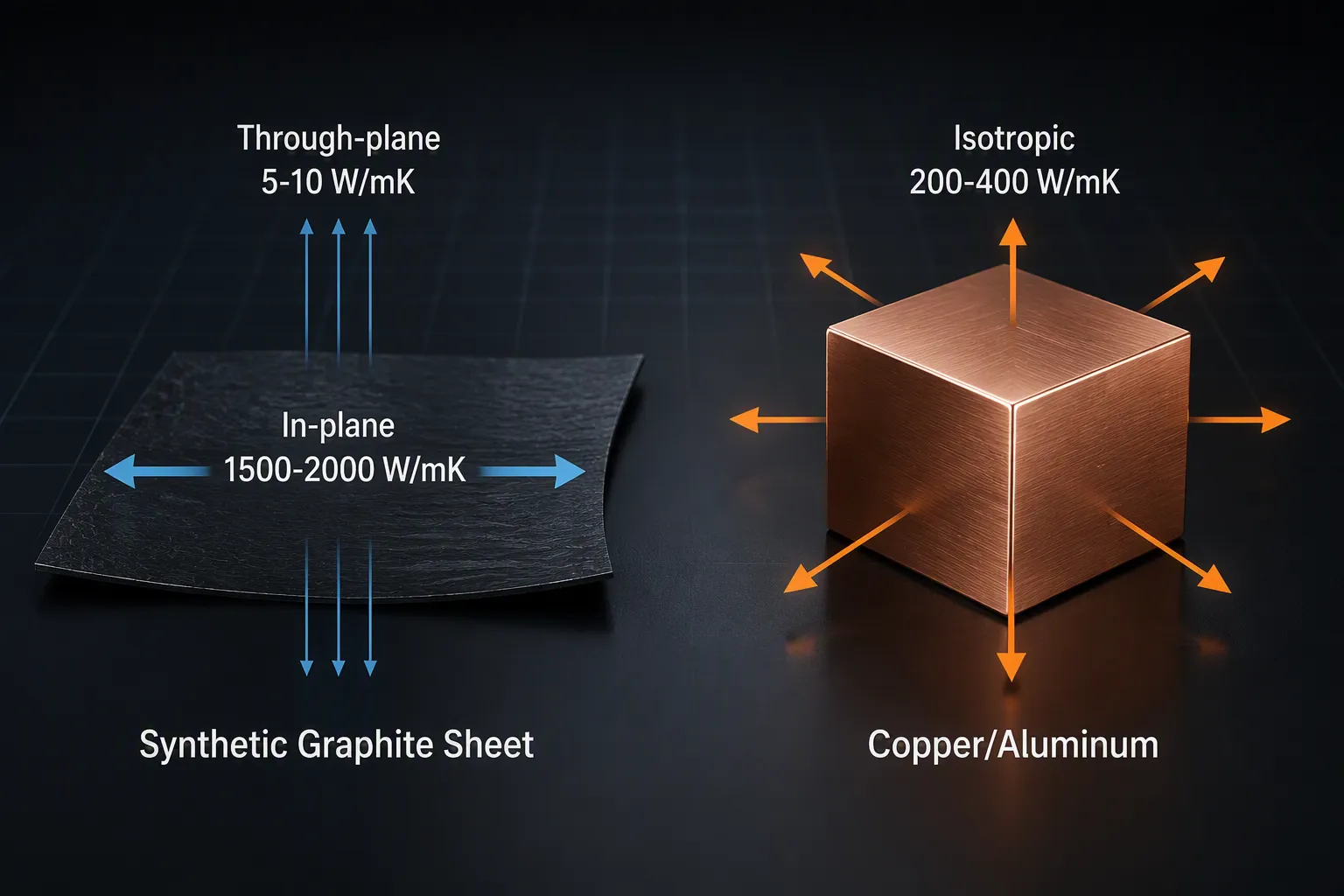
When you design a device that makes heat, you need a solid cooling plan. The best material for your cooling setup depends on how heat moves through it. Some materials spread heat sideways very well. Others push heat straight through. Knowing this difference helps you pick the right material for your needs. This thermal conductivity comparison shows the good and bad points of each option.
Heat does not move the same way through all materials. Some materials send heat evenly in every direction. Others favor one direction over another. This trait shapes how you use them in your design.
A synthetic graphite sheet starts as a polyimide film. Makers heat it above 2,800°C in a process called carbonization and graphitization. This builds a highly ordered structure where heat moves very fast along the of the sheet.
Direction | Thermal Conductivity (W/(m·K)) |
|---|---|
In- | 1500 - 2000 |
Through- | 5 - 10 |
DASEN's synthetic graphite sheets reach thermal conductivity at or above the top of this range. This puts them among the best high thermal conductivity materials available for planar heat spreading.
DASEN's synthetic graphite sheets are described as offering 'higher conductivity' compared to standard options, indicating that their in- thermal conductivity is at or above the upper end of the 1500-2000 W/(m·K) range.
Metals like copper and aluminum are isotropic. They conduct heat equally in all directions. Copper reaches about 400 W/mK in thermal conductivity. Aluminum reaches about 200 W/mK. This makes them great at moving heat vertically through a stack of parts.
But here is the trade-off. In the horizontal , a synthetic graphite sheet beats both metals by a wide margin. The through- weakness of graphite matters less when you want to spread heat across a large surface area. The anisotropic properties of graphite actually become a plus for this specific use case.
The shape of your heat spreader changes how heat moves. A thin film works differently than a thick block. For modern electronics, thin is often better.
Graphite heat spreaders use their layered crystal structure to move heat sideways at extreme speeds. Compare the diffusion times across a 1 mm path:
Material & Direction | Diffusion Time (1 mm path) |
|---|---|
In- graphite | 1.4 ms |
Copper | 9 ms |
Through-thickness graphite | 140 ms |
In- graphite diffuses lateral temperature changes an order of magnitude faster than copper. Through-thickness response is much slower, but that limit does not matter when your goal is spreading heat from a small hotspot across a board or chassis.
For ultra-fast lateral spreading with minimal added mass—such as thin heat spreaders in laptops and phones—use high in- graphite sheets (e.g., pyrolytic graphite). Apple and other OEMs rely on this approach. However, for through-thickness response, copper remains superior.
Copper works well as a thick heat sink. But in thin form factors, its isotropic nature becomes a weakness. Copper has higher mass and slower lateral diffusion. A copper sheet only 0.1 mm thick cannot spread heat sideways as fast as a graphite sheet of the same thickness.
Graphite heat spreaders range from 25 to 500 microns thick. They offer 40–60% weight reduction over copper. This mix of thin profile and high lateral conductivity makes them ideal for compact devices. The graphite sheet vs copper foil comparison clearly favors graphite for weight-sensitive, thin applications.
To pick the right material, you need to measure performance correctly. Two key metrics dominate the analysis: thermal resistance and thermal diffusivity.
Thermal resistance follows a simple relationship. Thermal resistance equals thickness divided by the product of thermal conductivity and area (R = t / (k × A)). Thicker materials increase resistance because heat must travel a longer path. Even a material with high thermal conductivity loses its edge if you make it too thick.
Consider this comparison. A 0.2 mm elastomeric pad contributes 90% of total system resistance. A 0.1 mm grease interface reduces that share to 56%. Thinner materials greatly lower thermal resistance and improve heat transfer efficiency.
The final compressed thickness matters more than the nominal thickness. This is key for achieving optimal thermal performance characteristics in your design. The physical properties of your chosen material directly affect the outcome.
Interface resistance arises where two materials meet. Even microscopic air gaps block heat flow. A thermal interface material fills these gaps. The thermal properties of that interface material determine how well the system performs.
For the best system-level performance, you need both high bulk conductivity and low interface resistance. A graphite sheet with high in- conductivity still needs good contact at the surfaces. DASEN's products address both needs, providing smooth surfaces that mate well with components and heat spreaders.
When you compare a graphite sheet vs copper foil, consider the whole system. Graphite wins for lateral spreading in thin devices. Copper wins for vertical heat transfer in thick stacks. Your choice depends on your specific geometry and space constraints.
When picking a material for heat control, three things matter: flexibility, weight, and durability. These traits decide how well a material fits your device. Synthetic graphite sheets beat metals in all three areas. This guide explains why these benefits matter for your next project.
Modern gadgets have tight spaces and unusual shapes. A heat spreader must fit into these spots. Graphite sheets bend easily without snapping. You can wrap them around curves. You can fold them into tight corners. This flexibility solves design problems that metals cannot handle.
Copper and aluminum need cutting and shaping to fit. If you bend metal too often, it breaks. This is called metal fatigue. Graphite does not have this issue. Its layered structure lets it flex without harm. You get a better fit with less work.
Foldable phones and smartwatches need parts that move with them. Graphite sheets handle repeated bending. They spring back to their original shape. This makes them ideal for wearables. Metal heat spreaders would fail here. They would crack after many folds. Graphite offers a fix that metals cannot match. This flexibility is a key graphite sheet benefit for designers today. It boosts cooling performance without hurting reliability.
Your device's weight matters. A heavy phone feels awkward in your hand. A heavy laptop is tough to carry. Copper is dense. It weighs 8.96 grams per cubic centimeter. Graphite is far lighter. Its density falls between 1.0 and 2.2 grams per cubic centimeter. This gap is massive. At the same thickness, a graphite heat spreader weighs much less than a copper one. You get strong heat control without adding bulk to your product.
DASEN's synthetic graphite sheets cut weight by 40 to 60 percent versus copper heat spreaders. This is a major plus. You keep your device cool without extra heft. For portable gadgets like phones and laptops, every gram matters. The graphite sheet vs copper foil comparison shows graphite winning clearly for weight-conscious designs. You get the cooling you need at a fraction of the weight.
Heat damages many materials. Metals oxidize over time. They rust or corrode in damp places. Moisture speeds up this harm. Graphite is different. It stays chemically stable. It does not oxidize easily. It resists corrosion. Graphite also survives thermal cycling well. Thermal cycling means moving from hot to cold and back again. Many materials fail under this stress. Graphite keeps working. High thermal conductivity materials like graphite offer these lasting benefits. Their steady properties keep your device running for years.
Fatigue resistance shows how well a material handles repeated stress. Metals weaken over time. Each bend or shake creates tiny cracks. These cracks grow. Eventually, the metal snaps. Graphite sheets handle repeated stress better. Their structure absorbs movement without cracking. This makes them more dependable for moving parts or devices that get knocked around. DASEN's products pair these tough qualities with excellent heat flow. You get long-lasting performance from your thermal management setup.
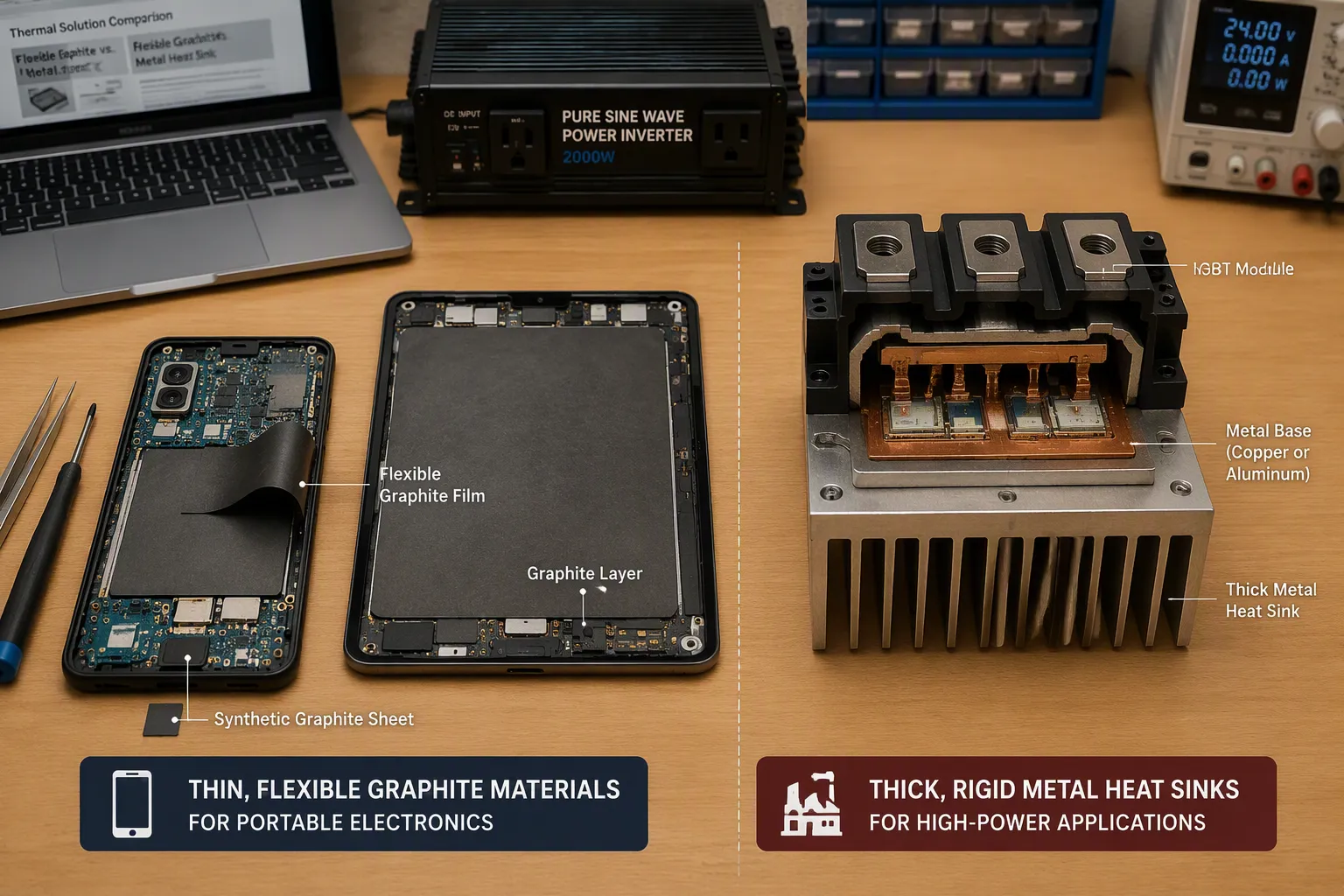
Since 2015, synthetic graphite sheet has been the go-to material for smartphones. Big brands use it in phones like the Samsung Galaxy S9 and OnePlus 12. In a thin device, you must move heat sideways. A phone board crams many hot parts into a tiny space. Without good spreading, those hotspots get dangerously hot.
Graphite heat spreaders fit this job well. Their thermal conductivity along the is very high. They carry heat from the processor to the outer shell. This keeps inside temperatures safe. When comparing graphite sheet vs copper foil, graphite comes out ahead. Copper cannot spread heat sideways as well at the same thickness.
Flexibility matters too. Modern phones have curved insides. A stiff metal sheet cannot fit those spaces. Graphite bends around parts with ease. It fits without cracking.
Thickness matters for spreaders. Every millimeter takes space from the battery. Graphite paper is extremely thin. It does not add bulk to devices. You can use a sheet as thin as 17 microns and still get great spreading. The trend is moving toward thinner materials for slimmer devices.
A typical smartphone places a graphite sheet between the board and the shield. This sheet spreads heat without adding thickness. Tablets and laptops follow the same pattern. You get strong cooling without making the device thicker. These thermal properties make graphite perfect for portable electronics.
High-power systems need a different method. IGBTs and inverters create huge amounts of heat. These parts need fast vertical heat transfer. The heat must go straight down into a cooling plate.
Copper is the best choice here. Copper reaches about 400 W/mK in thermal conductivity. It takes in heat quickly and moves it fast. Copper handles high temperatures without bending. These traits make copper perfect for industrial use. Aluminum costs less and still provides good heat dissipation.
For power plants and machinery, copper heat sinks stay the main option. Graphite sheet cannot replace copper in these cases. Its through- conductivity is much too low for these high-performance applications.
You can pair both materials for even better results. A copper base plate handles vertical heat transfer. A graphite sheet sits on top and spreads heat across the surface. This cuts down hotspots and boosts system efficiency.
Hybrid solutions also reduce weight. For EV battery packs, weight is a big concern. You get the strengths of both materials. Metals give vertical conductivity. Graphite gives lateral spreading.
LED lights create heat at the junction. Without cooling, that heat shortens LED life. High-brightness LED systems need solid thermal management. Graphite sheet moves heat from the chip to a wider area. This analysis shows graphite handles this job well.
Many LED assemblies use graphite. The sheet fills gaps at the interface. This lowers thermal resistance and improves light stability. These high thermal conductivity materials give excellent results.
EV battery packs face serious heat challenges. Fast charging builds up heat quickly. That heat must reach cooling plates fast. Graphite heat spreaders help in this role. They sit between cells and cooling plates. Flexible graphite sheets with high lateral conductivity limit thermal spread during charging.
Weight savings matter here. Every kilogram counts in an EV. Graphite cuts cooling system weight. This supports longer range and better efficiency. The growing use of graphite in electronics and new energy fields shows strong demand for smart thermal management solutions.
You have seen how these materials differ. Now you need a source you can trust. DASEN works only on thermal management. They started in 2011 and have learned a lot since then. Their facility spans over 10,000 square meters. Around 170 people work there. They make top-quality graphite films that fix heat issues in today's gadgets.
DASEN uses a tested method to create synthetic graphite sheets. It begins with a polyimide film. They heat this film past 2,800°C. This intense step lines up the carbon atoms in layers. That structure gives the sheet its strong thermal conductivity. You get high-level results from this process. The method keeps both thickness and density steady. This helps the sheet match your specific needs.
You want steady quality from your suppliers. DASEN holds ISO9001, ISO14001, and QC080000 certifications. These cover quality, environmental safety, and hazardous materials. Their thermal management products meet these strict standards. This dependability matters for today's electronics. You can build with confidence in the material.
DASEN makes two main kinds of graphite sheets. Synthetic graphite sheets offer very high thermal conductivity. DASEN's synthetic graphite heat spreaders suit thin devices well. They move heat fast across a surface. Natural graphite sheets provide decent heat control for less money. Each type has its own traits. You can choose what fits your design's thermal needs.
DASEN offers other options for various uses. Silicone Thermal Pads fill spaces between parts and heat sinks. They transfer heat well and block electricity. They keep good thermal flow across the gap. These pads help you handle heat properly. Carbon Fiber products bring strength and light weight. You get a full range of thermal management tools.
DASEN owns more than 10 invention patents. This proves their commitment to new ideas. Their plant makes 6 million square meters of material yearly. That output shows their strong market position. Customers around the globe use their goods to boost device performance. You can rely on their supply and know-how.
DASEN works across many fields. You see their materials in consumer electronics, medical gear, and new energy systems. They also serve automotive and lighting industries. They build custom answers for tough heat problems. This makes them a solid partner for your next engineering effort.
You might think copper costs less than synthetic graphite. Making graphite sheets needs complex steps. Polyimide films must be heated at very high temperatures. This makes them more expensive. Copper and aluminum have large, well-established mining and refining industries. Their supply chains work at a huge scale. But you should not only look at the price per kilogram. Graphite often gives you more performance for the money. When you compare thermal conductivity per dollar, graphite spreads more heat per gram.
The full cost includes putting everything together. Graphite sheets come with sticky backing. You can peel and place them quickly. This saves labor time. Copper heat spreaders need cutting, stamping, or shaping. Each step adds cost and possible flaws. Graphite sheets cut cleanly without rough edges. They bend around curves without special tools. In high-volume electronics production, these savings add up fast. Your success rate improves because graphite placement causes fewer mistakes. When you look at total system cost, graphite often wins even though the material itself costs more.
Metals have a clear edge in recycling. Copper and aluminum can be melted down and reused many times. Their value makes collecting them worthwhile. Synthetic graphite is harder to recycle. The sticky layers and mixed structures make separation difficult. Few recycling centers accept graphite. Most of it ends up in landfills. This matters if your company tracks green goals. You should think about the environmental cost of throwing graphite away versus the cooling benefits it gives during product use.
Making graphite needs intense heat. The graphitization step goes above 2,800°C. This uses a lot of energy. Copper refining also needs plenty of power. Aluminum production is known for high energy use. The comparison is not straightforward. But graphite's light weight cuts energy use when devices run. A lighter phone or laptop takes less power to move. Across millions of devices, this saving grows. The total energy used over a product's life may favor graphite even though making it costs more energy.
Start by asking about your device shape. Does heat need to spread sideways across a wide area? Or must it move straight through a stack of parts? Next, check your weight limits. Every gram counts in portable electronics. Think about your production process. Can your line handle sticky-backed films? Finally, review your environmental targets. Does your company care about recycling? These questions help narrow your choices quickly.
Pick synthetic graphite for thin, light, bendable designs. Smartphones, tablets, and wearables benefit the most. These devices need heat to spread sideways without extra weight. Pick copper or aluminum for high-power, stiff uses. IGBTs, inverters, and factory equipment need heat to move straight through. Traditional thermal interface materials still work well in these roles. You can also use both methods together. Use metal for the main heat path and graphite as an extra spreader. This mixed approach boosts performance while keeping weight and cost in check.
Picking the right material for heat control affects how well your product works. This guide shows that synthetic graphite sheets work best in thin, light gadgets. Their ability to move heat sideways reaches 2000 W/mK, much higher than copper's 400 W/mK. Graphite heat spreaders move heat across surfaces easily. They are 40-60% lighter than copper. For phones, wearables, and LED lights, graphite is the clear winner.
Copper and aluminum still do a good job in high-power systems. They push heat straight through thick layers. They also cost less for factory and industrial use.
DASEN has more than ten years of experience in thermal management. Their synthetic graphite sheets meet the needs of today's electronics. Knowing how heat moves helps you make better designs. As devices produce more heat, smart cooling becomes a must. Graphite spreaders give the flexibility and performance that future devices will need.
Synthetic graphite moves heat sideways at speeds up to 2000 W/mK. Copper reaches only 400 W/mK. Graphite weighs 40-60% less than copper. You can bend graphite around corners. Copper stays stiff and heavy. These properties make graphite ideal for thin devices.
Higher thermal conductivity means faster heat movement. Your processor generates heat during operation. Without quick dissipation, temperatures climb. Your device then slows down to protect itself. You experience lag and reduced speed. Good thermal management keeps your device running at full performance.
Graphite works best for spreading heat across surfaces. High-power systems like IGBTs need vertical heat transfer. Copper excels in this role. You can combine both materials. Use copper for the main heat path. Add graphite as a secondary spreader to reduce weight.
Anisotropic means heat moves faster in one direction. Graphite conducts heat extremely well along its . Through its thickness, conductivity drops significantly. This trait helps spread heat from small hotspots. You get efficient cooling across a large surface area.
Manufacturers produce graphite sheets as thin as 17 microns. That measurement beats a human hair's width. You can fit these sheets into tight spaces. Smartphones and tablets use them between boards and shields. The thin profile saves space for batteries and other components.
Graphite resists oxidation and corrosion better than metals. It survives thermal cycling without cracking. Metals develop fatigue under repeated stress. Graphite's layered structure absorbs movement. Your device keeps cooling effectively for years. This durability makes graphite a reliable choice for long-term use.
Consumer electronics gain the most benefits. Smartphones, tablets, and laptops use graphite spreaders widely. LED lighting and EV batteries also benefit. Medical devices and telecom equipment use them too. Any device needing light, flexible heat control works well with graphite.
Ask about your device shape first. Does heat need to spread sideways? Choose graphite. Does heat need to move straight through? Choose copper or aluminum. Consider weight limits and production methods. Match the material to your specific thermal interface needs.