
Views: 0 Author: Site Editor Publish Time: 2026-04-06 Origin: Site


You can find many main types of carbon fiber weave patterns. These include plain, twill, satin, unidirectional, spread tow, braided, and custom designs. Each pattern has a special job in how a product looks and works. For example, plain weave is used a lot in car parts and s. Twill weave is seen most in fancy sports gear and luxury items. The weave you pick changes the strength, flexibility, weight, and price. You need to know these differences to pick the best carbon fiber weave for your project. DASEN gives advanced carbon fiber and thermal management solutions for high performance and reliability.
Learn about the main carbon fiber weave patterns. These include plain, twill, satin, unidirectional, spread tow, braided, and custom designs.
Pick plain weave if you want stability and easy use. It is good for beginners who work on flat surfaces.
Choose twill weave for flexibility and a modern look. It works well for complex shapes in luxury items and space uses.
Go with satin weave when looks are most important. It gives a shiny finish and bends easily for detailed designs.
Use unidirectional weave for the strongest parts in one direction. It is great for beams and panels in structures.
Try spread tow weave for parts that are light but strong. It lets resin flow better and lowers gaps.
Braided carbon fiber is very flexible and tough. It is good for tubes and parts that need twisting strength.
Custom weaves, like fish weave and dual twill, help make special designs. They keep performance high and fit certain project needs.
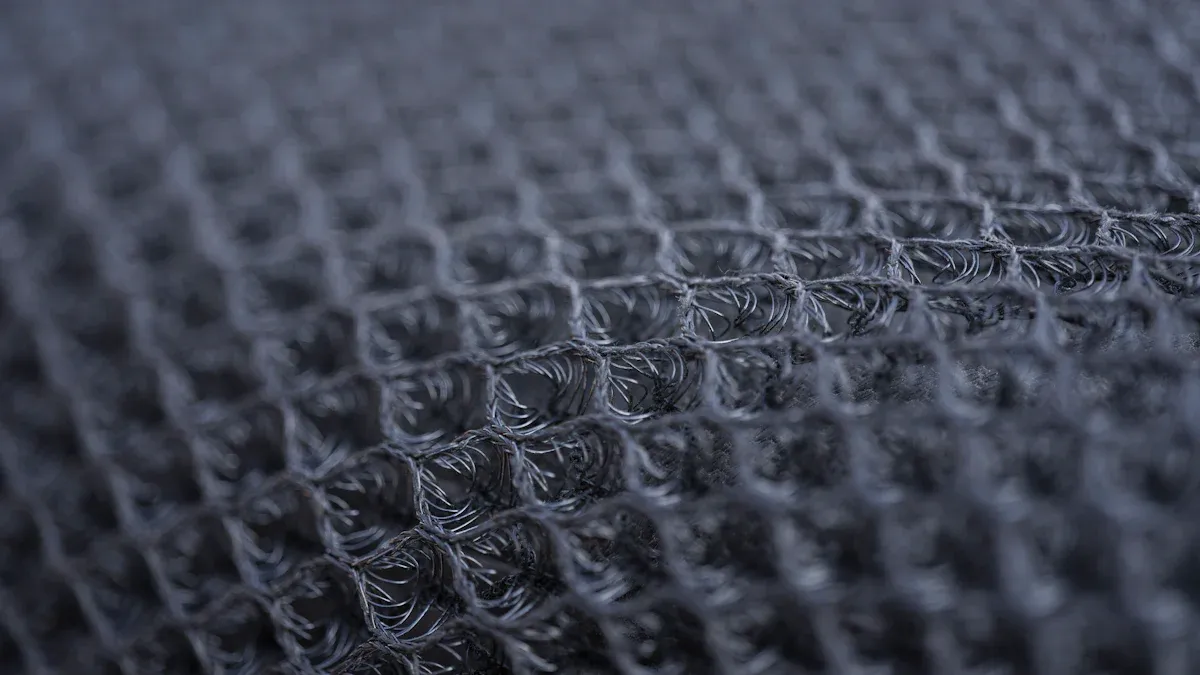
Image Source: unsplash
Knowing about carbon fiber weave patterns helps you pick the right material. Each pattern has its own shape, look, and features. Let’s learn about the most common carbon fiber patterns: plain, twill, and satin.
Plain weave is the simplest carbon fiber weave pattern. In this pattern, each fiber strand goes over and under the next strand. The strands cross at right angles. You see a basic crisscross design. This makes the fabric tight and stable.
You can spot plain weave by its checkerboard look. The pattern is even and balanced. The surface feels smooth and flat. This weave gives a classic carbon fiber look that many people know.
Plain weave is strong and stable. It keeps its shape and does not stretch much. The tight weave gives it high crimp. This means the fibers bend more at each crossing. The fabric is less flexible. It has moderate drapability, so it works best on flat or gently curved surfaces.
Here is a quick comparison of the main features:
Weave Type | Stability | Drapability | Appearance | Crimp |
|---|---|---|---|---|
Plain | High | Moderate | Checkerboard | High |
Tip: Plain weave is easy to use and cut. It is a good choice for beginners working with carbon fiber fabric.
Plain weave is used in space, cars, and sports gear. It works well for flat panels, tubes, and simple curves. Engineers use it when they need high stability and a smooth finish. It is not good for complex shapes because it does not drape easily.
Twill weave uses a different pattern. Each fiber goes over two or more fibers, then under one or more fibers. This makes a diagonal rib across the fabric. The structure is more open than plain weave. It gives extra flexibility.
Twill weave stands out with its diagonal lines. The pattern looks smooth and lively. Many people like twill for its modern and stylish look. You see this weave in high-end carbon fiber products.
Twill weave is flexible and has moderate stability. The fibers bend less than in plain weave. It has medium crimp. This makes the fabric easier to shape around curves and corners. Twill weave is more flexible than plain weave but still strong.
Feature | Twill Weave | Plain Weave |
|---|---|---|
Pattern | Diagonal pattern | Straight checkerboard |
Flexibility | More flexible | Less flexible |
Aesthetic Appeal | Smoother, dynamic appearance | More utilitarian appearance |
Note: Twill weave carbon fiber patterns are popular in space and car parts. They need both strength and a premium look.
Twill weave is used in space, luxury cars, and sports equipment. It is great for parts with complex shapes because it drapes well. Designers use twill weave for visible carbon fiber patterns on dashboards, bike frames, and helmets. It gives performance and a high-end finish.
Satin weave uses a special pattern. Each fiber goes over several fibers before going under one. This reduces crossings and makes a smooth surface. Satin weave has the lowest crimp among the main types of carbon fiber weave patterns.
You notice satin weave by its shiny, glossy finish. The surface looks almost like silk. The weave pattern is less visible. It gives a clean and fancy look. Many luxury products use satin weave for its nice appearance.
Satin weave is very easy to drape and has a smooth surface. It has low stability compared to plain and twill weaves. It translates tensile strength very well. The fabric bends easily, so you can wrap it around complex shapes. Satin weave is perfect when you want a flawless finish.
Weave Type | Crimp Frequency | Drapability | Primary Benefit |
|---|---|---|---|
Satin | Lowest | Excellent | Highest tensile translation, smoothest |
Note: Satin weave is a top choice for projects where looks matter as much as performance.
Satin weave is used in space, high-performance cars, and luxury goods. It is used for visible parts where a smooth, shiny finish is important. Many companies pick satin weave for carbon fiber patterns in premium products, like custom car interiors and designer accessories.
By learning about these carbon fiber weave patterns, you can pick the best carbon fiber types for your needs. Each weave pattern gives special benefits for different uses, from space to sports gear. DASEN offers many carbon fiber weaves to fit your project.
Unidirectional carbon fiber has all fibers going one way. You will not see the over-under pattern here. Each strand runs next to the others in straight lines. The fabric looks like a bunch of lines. Makers use a light binder to keep fibers together until resin is added.
You can spot unidirectional carbon fiber by its straight, smooth look. There is no checkerboard or diagonal pattern. You only see long, straight fibers side by side. This weave looks clean and technical. It is not as decorative as other carbon fiber weave patterns.
Unidirectional carbon fiber is known for its strength. When fibers match the force direction, you get the most strength. This is because the fibers do not bend at crossings. You get:
The most stiffness and strength along the fiber direction
Less strength if the force is not in the fiber direction
Lower impact resistance than woven carbon fiber weave patterns
Tests show unidirectional carbon fiber is best for strength in one way. Engineers use uni-directional layers for strength. They add woven layers for better damage resistance.
Unidirectional carbon fiber is used in many strong structures. It works best when you need strength in one direction. Here is a table with common uses:
Application Type | Description |
|---|---|
Bending and shear strengthening | Makes concrete stronger using bonding and embedding |
Seismic strengthening | Wraps columns to help them during earthquakes |
Strengthening structures | Makes steel, masonry, and wood stronger and less tired |
Complex environments | Used in underground and underwater places |
Special structures | Used in bridges, tunnels, and special buildings for long life |
You often see uni-directional carbon fiber in s, buildings, and sports gear. It is great for beams, columns, and panels that need strength in one way.
Spread tow weave uses flat, wide bundles called tows. These tows are spread out to make a thin, smooth fabric. The pattern can look like plain or twill. The fibers lay flatter and cover more space. This means fewer crossings and less crimp in the fabric.
Spread tow weave looks very clean and modern. The surface is smooth with sharp, clear lines. You do not see thick fiber bundles. The fabric looks almost like a film with a high-tech finish. Many designers pick this weave for its special look.
Spread tow weave makes carbon fiber lighter but still strong. The flat tows let resin flow better, so there are fewer gaps. You get a lighter part that is still strong. The fabric packs fibers close together, which helps strength. Spread tow also saves resin, making the part lighter and stronger.
Tip: Spread tow weave is good when you want a light part that stays strong.
Spread tow carbon fiber is used in top industries. Here is where you might see it:
Industry | Common Uses |
|---|---|
Aerospace | Light, strong parts |
Automotive | High-performance panels and car parts |
Sporting Goods | Sports gear where strength and looks matter |
You will see spread tow weave in parts, race car panels, and fancy sports gear. It is a top choice for both performance and a cool look.
Braided carbon fiber weave uses fibers woven in a braid. The fibers cross over and under at angles. This makes a flexible, interlocking structure. You can braid fibers in different ways for round or odd shapes.
Braided carbon fiber has a special woven look. The pattern makes diagonal lines that wrap around the part. You often see this weave on tubes, rods, and curved things. The surface looks lively and technical. It is popular for parts you can see.
Braided carbon fiber weave gives many benefits:
Great twisting strength and flexibility
Spreads stress evenly across the part
Better durability and less chance of breaking
Good at handling hits and twisting forces
The braid helps stop cracks from spreading. Braided shapes also fit well to curves and bends. This makes them good for tricky shapes.
Braided carbon fiber is used in many advanced things. It is common in:
Tubes like drive shafts and roll cages
Plane parts that need to twist without breaking
Robots and prosthetics that need odd shapes
Braided carbon fiber is great for strength, flexibility, and fitting odd shapes. It stands out among carbon fiber weave patterns for being easy to use and strong.
Custom carbon fiber weaves give you more choices for special needs. These patterns are not like the usual ones. You can use them for unique shapes or advanced projects. Let’s check out some popular custom carbon fiber weaves and how they help with tough problems.
Fish weave has a pattern that looks like fish scales. This design makes your project look cool and different. The surface shines in many ways when light hits it. Fish weave uses carbon fiber strands that cross in a curved way. This makes the fabric strong and flexible.
You might pick fish weave if you want your product to stand out. It is good for things you can see, like sports gear or fancy electronics. Fish weave keeps its strength and bends well, so you do not lose performance for style.
Tip: Fish weave is a smart pick if you want your carbon fiber part to get noticed.
Dual twill mixes two twill patterns in one fabric. You see lines crossing in different ways. This weave gives a bold and modern look. Dual twill uses carbon fiber bundles that follow two paths. This makes the fabric strong and flexible in more than one way.
You can use dual twill when you want both style and strength. The pattern looks nice on car parts, bike frames, and cool accessories. Dual twill spreads out stress, so your part can handle force from many sides. You get the good things about twill, like easy shaping and a smooth finish, but with a stronger look.
Note: Dual twill is a favorite for custom carbon fiber projects where looks and performance both matter.
Custom carbon fiber weaves help you fix hard engineering problems. You can pick a weave that fits your needs. Here are some examples of custom weaves and what they do:
Carbon Fiber Weave Type | Description | Specialized Application |
|---|---|---|
Twill Weave | Easy to spot and strong, helps stop chipping. | Used in race cars to protect from rock chips. |
Unidirectional | Strong and light, can go in many directions. | Used in s and boats for top strength. |
Filament Wound | Strong, light, and looks special. | Used in many things for strength and style. |
Harness Satin Weave | Smooth and easy to shape. | Great for curved things like shoe insoles. |
Wasp Carbon Fiber | Honeycomb shape for strength and stiffness. | Used in fancy sports gear and medical tools. |
Triaxial Balanced | Fibers go three ways for even strength. | Good for safety gear and custom supports. |
You can also find wasp carbon fiber, which has a honeycomb shape for extra strength and less weight. Triaxial balanced carbon fiber lines up fibers three ways, so it is strong all over. Some luxury insoles use a 1K x 3K plain weave for looks and support. Labyrinth carbon fiber uses tricky designs for high-end products that need style and function.
Custom carbon fiber weaves let you match the material to your project. You can pick a weave for more strength, less weight, or a special look. Many industries use these weaves for advanced things. You see them in electronics, sports gear, medical tools, and more. DASEN has many carbon fiber weaves, so you can find what you need.
Callout: If you need a carbon fiber answer for a special problem, custom weaves give you the options and performance you want.
It is important to know how carbon fiber weave patterns change mechanical properties. The way fibers are put together changes how strong and stiff the material is. For example, pick density and float length in a weave can make a big difference. If you use more pick density, you get more wefts in each centimeter. This makes the carbon fiber composite stronger and stiffer. The weave’s structure matters just as much as the fiber type. You see this in carbon fiber sheets for s and high-performance projects. The weave pattern affects strength a lot. If you pick the right weave with good density and arrangement, you get better performance and a good strength-to-weight ratio.
The strength of carbon fiber depends on both the fiber and the weave pattern. You can make your project better by picking the right weave for what you need.
You want your carbon fiber part to bend but not break. Flexibility and strength change with the weave pattern you use. Here is how plain, twill, and harness satin weave are different:
Twill weave is stronger when you bend it than plain or harness satin weave.
Twill weave fabric wrinkles less and is stronger than plain weave.
Hybrid Kevlar–carbon woven fabric is the strongest, about 27% stronger than multi-layered carbon fiber.
It is easy to see how the weave changes strength. Twill weave gives you more flexibility and a better strength-to-weight ratio. Harness satin weave is easy to shape around curves. Plain weave is stable but not as flexible. You need to pick the right weave for your project. For high-performance uses, twill and harness satin weave are usually the best.
Tip: If you want both strength and toughness, twill weave and harness satin weave are good choices for carbon fiber parts.
You want your carbon fiber part to take hits and shocks. How well it does this depends on the weave pattern. Some weaves, like braided and harness satin weave, spread out stress. This helps stop cracks from getting bigger. Twill weave also protects well because it bends easily. A strong weave can keep your part safe in tough places. You see this in parts and sports gear. Carbon fiber with the right weave lasts longer and works better.
Weave Pattern | Impact Resistance | Flexibility | Strength-to-Weight |
|---|---|---|---|
Plain | Moderate | Low | High |
Twill | High | High | High |
Harness Satin Weave | High | Excellent | High |
Braided | Very High | Excellent | Moderate |
You need to choose the right carbon fiber weave pattern for your project. The weave changes how strong and tough your part is. DASEN’s carbon fiber products use advanced weaves to give you the best results for high-performance needs.
When you choose a carbon fiber weave, you also decide how your product will look. The visual appearance of carbon fiber changes with each weave pattern. You can see these differences right away. Some patterns look shiny and smooth. Others have a simple or sporty style. The way light hits the surface can make the carbon fiber stand out or look more subtle.
Satin weave gives you a glossy finish. This weave reflects light in a special way. It looks smooth and refined. Many people pick satin weave when they want carbon fiber to look high-end. The surface feels almost like silk. You see this weave in luxury cars and designer products.
The 2x2 twill weave has a classic, sporty look. It shows off diagonal lines that catch the light. When you put a clear coat on twill carbon fiber, it shines and looks deep. Many sports cars and bikes use this weave for its bold style.
Plain weave has a simple checkerboard pattern. It does not reflect light as much as satin or twill. The texture looks flat and even. If you want a clean and classic carbon fiber look, plain weave is a good choice.
You can compare the main carbon fiber weave patterns in the table below:
Weave Pattern | Aesthetic Features |
|---|---|
2x2 Twill | Classic, sporty look with striking reflectivity under clear coat |
Satin | Glossy finish with refined aesthetic appeal, unique light reflection |
Plain | Simple texture, less depth compared to twill and satin |
When you look at carbon fiber products, you notice these patterns right away. Satin weave stands out for its shine and smoothness. Twill weave gives you a sense of movement and depth. Plain weave keeps things simple and neat. Each pattern changes how the carbon fiber feels in your hand and how it looks in the light.
Tip: If you want your carbon fiber part to catch attention, pick satin or twill weave. For a more classic or subtle style, plain weave works well.
DASEN uses advanced weaving methods to make sure every carbon fiber product looks its best. You get a choice of patterns to match your design needs. Whether you want a glossy finish or a sporty look, you can find the right carbon fiber weave for your project.
DASEN has many kinds of carbon fiber sheets. Each sheet uses its own weave pattern. Some patterns are plain, twill, satin, unidirectional, spread tow, and braided. You can pick the weave that works best for your project. DASEN makes sheets that are strong, light, and bend easily. The sheets work on both flat and curved shapes. You can use them for panels, covers, or frames. The sheets look shiny and neat because of their smooth finish and clear patterns.
Tip: DASEN carbon fiber sheets give you strength, low weight, and style. You can choose the weave pattern that fits what you need.
You can use DASEN carbon fiber in lots of ways. The sheets and tubes are used in electronics, cars, medical tools, and energy products. In electronics, carbon fiber makes things lighter and stronger. You see it in phone cases, tablets, and laptops. It also helps keep devices cool by moving heat away. In cars and bikes, carbon fiber takes the place of heavy metals. You find it in car parts, bike frames, and panels. This makes vehicles lighter and faster. In medical tools, carbon fiber is strong but not heavy. Doctors use it for braces, supports, and surgery tools. In energy, carbon fiber is used for battery cases and heat sinks. It helps keep things cool and safe.
Application Area | Benefit of Carbon Fiber Use |
|---|---|
Electronics | Light, strong, keeps devices cool |
Transportation | Less weight, better performance |
Medical Devices | Strong, light, easy to shape |
Energy Solutions | Handles heat, protects parts |
DASEN carbon fiber is used in many industries. Here are some examples:
Bicycles: DASEN carbon fiber tubes are used for frames, handlebars, wheels, seatposts, and forks. These parts are 40–60% lighter than aluminum. Riders get stiffer bikes, less tired arms, and smoother rides.
Automotive and Transportation: Carbon fiber tubes replace steel and aluminum in car parts. This change can cut weight by up to half. Cars use less fuel and are easier to drive. You see carbon fiber in high-performance car parts.
Consumer Electronics and Energy: DASEN carbon fiber tubes make phones and tablets lighter and stronger. The material also helps batteries and energy devices stay cool.
You can see that DASEN carbon fiber works for many needs. The right weave pattern gives you the best mix of strength, weight, and looks. DASEN helps you pick the best carbon fiber for your project.
When you choose a carbon fiber weave, you need to think about how you will use the part. Each project has different needs. Here are some things you should consider:
Complexity of the Part: If your part has many curves or shapes, twill or satin weaves work best. These weaves bend and wrap around corners easily.
Strength Requirements: If you need a strong and reliable part, plain weave is a good choice. Twill and satin weaves also give strong performance, especially when the part might get hit or bumped.
Cost Considerations: Plain weave is the most affordable. Twill and satin weaves cost more because they are harder to make.
You should match the weave to your project’s shape, strength, and budget. DASEN can help you pick the right carbon fiber for your needs.
Tip: For simple, flat parts, plain weave works well. For tricky shapes, try twill or satin.
You want your carbon fiber part to do its job well. The weave pattern changes how the part acts under stress. You should look at strength, stiffness, and how the part handles repeated use. Here is a table to help you compare:
Weave Type | Strength | Stiffness | Shear Resistance | Fatigue Performance |
|---|---|---|---|---|
Plain Weave | High | Regular | High | Moderate |
Twill Weave | Moderate | High | Moderate | High |
Satin Weave | Low | High | Low | Moderate |
If you need high-performance parts, twill and satin weaves give you more flexibility and better fatigue life. Plain weave gives you strong and stiff parts for simple jobs. You should always match the weave to the performance you want.
Note: DASEN’s carbon fiber products use advanced weaving to give you the best mix of strength and flexibility.
How your carbon fiber part looks can be just as important as how it works. Some weaves look simple, while others look shiny or stylish. Here is a table to show you the differences:
Weave Type | Aesthetic Appeal |
|---|---|
Plain Weave | Grid-like pattern, less smooth |
Twill Weave | More traditional look, visually appealing |
Satin Weave | High-gloss finish, visually attractive |
Twill weave stands out for its diagonal lines and unique texture. Many people pick twill for visible parts in cars, bikes, or electronics. Satin weave gives a glossy, luxury look. You can make it even shinier with a clear coat or tint. Plain weave gives a classic, simple style.
You should think about where people will see your carbon fiber part. If you want it to catch the eye, twill or satin weaves are great choices. DASEN offers many options, so you can balance performance and appearance for your project.
Callout: Always balance how your part looks with how it performs. DASEN’s experts can help you find the right carbon fiber weave for any job.
Image Source: pexels
You want your project to be strong and last a long time. The carbon fiber weave you pick changes how tough and stiff your part is. Each weave type has its own strengths. You can see the differences in this table:
Carbon Fiber Weave Type | Tensile Strength (MPa) | Stiffness (Elastic Modulus, GPa) | Durability / Other Properties |
|---|---|---|---|
Woven Carbon Fiber Fabric | 3500–4900 | 230–245 | Density: 1.76 g/cm³ |
UD (Unidirectional) Carbon Fiber Fabric | 4000–4900 (0° direction) | 230–240 | Elongation: 1.5–2.0% |
Carbon Fiber Kevlar Cloth | N/A | N/A | Up to 40% higher impact resistance; excellent tear and abrasion resistance |
Carbon Spread Tow Fabric | 10–15% higher than standard woven fabrics | N/A | N/A |
Unidirectional carbon fiber is strongest in one way. Woven fabric gives even strength and stiffness. Spread tow fabric spreads out the fibers for more strength. Kevlar blends help parts take hits better. Pick the weave that matches what your project needs.
Tip: If you need a really strong part, use unidirectional or spread tow weaves.
How your carbon fiber part looks and feels is important too. Each weave pattern makes a different look and texture. Here is a quick guide to the main types:
Weave Type | Visual Characteristics | Textural Properties |
|---|---|---|
Plain | Even, basket-like pattern | Very stable, bends a little |
Twill | Diagonal lines, sporty style | Bends better, more flexible |
Satin | Shiny, smooth surface | Strong, light, very bendy |
Plain weave looks classic and neat. Twill weave has slanted lines and looks sporty. Satin weave is shiny and feels smooth. Twill and satin weaves bend around curves more easily. You often see twill on race cars and parts because it looks cool and wraps well.
Plain weave: Very stable, flat surface, bends a bit.
Twill weave: Bends better, more flexible, looks nice.
Satin weave: Super smooth and shiny, light, very flexible.
Note: For a bold look, pick twill or satin weave.
You need to choose the right weave for your project. Some weaves are best for strength, others for looks, and some for special jobs. Check this table to see which weave fits your needs:
Carbon Fiber Pattern | Key Features | Best Applications |
|---|---|---|
Unidirectional | Strongest in one way, very stiff. | Panels, medical tools. |
Wasp | Honeycomb shape, super strong and stiff. | Fancy sports gear, special medical tools. |
Triaxial Balanced | Even strength in many ways, very useful. | Safety gear, custom supports, car parts. |
Labyrinth | Fancy pattern, stands out, works well. | Custom products, special gear, sports insoles. |
Use unidirectional carbon fiber for parts that need to be strong in one way. Wasp and triaxial weaves are good for safety gear and sports stuff. Labyrinth weaves look special and are used for custom or luxury things. Always pick the weave that fits your project best for good looks and performance.
Callout: The right carbon fiber weave gives you the best mix of strength, style, and function for any project.
You now know about the main carbon fiber weave patterns. Each pattern gives its own strength, flexibility, and style. You can pick plain, twill, satin, unidirectional, spread tow, braided, or custom carbon fiber for your project. It is important to match the weave to your project’s needs and how you want it to look. DASEN has advanced carbon fiber for electronics, cars, medical tools, and energy products. You can count on DASEN to help you choose the best carbon fiber. If you want your project to work well and last, ask DASEN for expert help. The right carbon fiber can make your next project special.
You get the most strength from unidirectional carbon fiber when you align the fibers with the force. For all-around strength, twill and spread tow weaves also work well.
Many people like twill weave for its diagonal lines and sporty style. Satin weave gives a glossy, luxury look. You can choose based on your taste.
Yes, you can. Twill, satin, and braided weaves bend easily around curves. These patterns work well for complex shapes and rounded parts.
Think about what you need—strength, flexibility, or looks. Plain weave works for flat parts. Twill and satin fit curves. DASEN can help you choose.
No, carbon fiber is much lighter than steel or aluminum. You can make strong parts without adding much weight.
The weave pattern does not change heat resistance much. The fiber type and resin matter more. DASEN’s carbon fiber products handle heat well.
You can use them in electronics, cars, bikes, medical tools, and energy devices. DASEN offers many weave patterns for different needs.
Yes, you can. DASEN provides custom weaves like fish weave, dual twill, and more. You can match your project’s style and performance needs.